LotRFI Pt.37–Of Shelob

I am, and have been since I can remember, afraid of spiders. Therefore, Tolkien’s giant monster guarding the back entrance to Mordor was the worst of all possibilities. This horrid creature still makes my hair stand on end when I think about it. I remember that my first read of the passage was very difficult because I kept feeling a strong desire to put the book down to get a reprieve from the creepy thing.

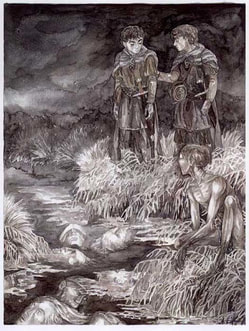
6813-j-r-r-tolkien-the-lord-of-the-rings-shelob-samwise-gamgee_orig
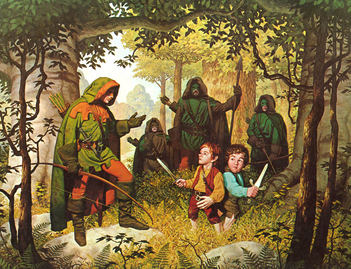
Image copyright John Howe

This giant spider felt to me like something taken straight from my nightmares and placed as an obstacle for Frodo and Sam. I could not imagine a worse foe to come across. Since it had not been too long since I read H, I anticipated that the creature was a spider early. I knew for certain by the time Frodo held up Galadriel’s gift and revealed ‘two great clusters of many-windowed eyes’ (TT, IV, ix, 720), but I believe I suspected as early as the ‘venomous hiss’ (TT, IV, ix, 719). As I read the struggle between this ancient beastie and the protagonists, I frequently experienced shivers down my spine.

When Shelob stabs Frodo with her stinger, I did not, could not, believe that he was dead. Sam’s courage in this moment was infections, and I remember vividly cheering him on to vanquish the awful creature. I was disappointed when the despicable thing was able to retreat. Again, I did not really believe that Frodo was dead. I remembered Frodo’s tendency to receive a stab wound in battle and fall, as if he were dead, only to revive a minute or two later: look no further than Weathertop and the Chamber of Mazarbul. It was Sam’s lamentation that started to make me consider that this time was different.

Ultimately, when Sam took the Ring from Frodo and claimed the quest as his own, I truly believed that Frodo was dead. I was elated, then, at the reveal of the poison that mocks death and the realization that Frodo was not dead! I also remember my response to the final line of TT.

‘Frodo was alive but taken by the Enemy’ (TT, IV, x, 742).

I exclaimed aloud: ‘Wait…What?’ and immediately picked up the next volume.

Where Do We Go From Here?​

Gollum then Sam’s ruminations.

What Do You Think?

Was Shelob the worst creature battle for you as well?
What did you make of Sam’s courage and Frodo’s death?
​Did I miss anything? Let me know!

Don Standing’s Experience–Tolkien Experience Project (35)

This is one in a series of posts where the content is provided by a guest who has graciously answered five questions about their experience as a Tolkien reader. I am very humbled that anyone volunteers to spend time in this busy world to answer questions for my blog, and so I give my sincerest thanks to Don and the other participants for this.

To see the idea behind this project, check out this page

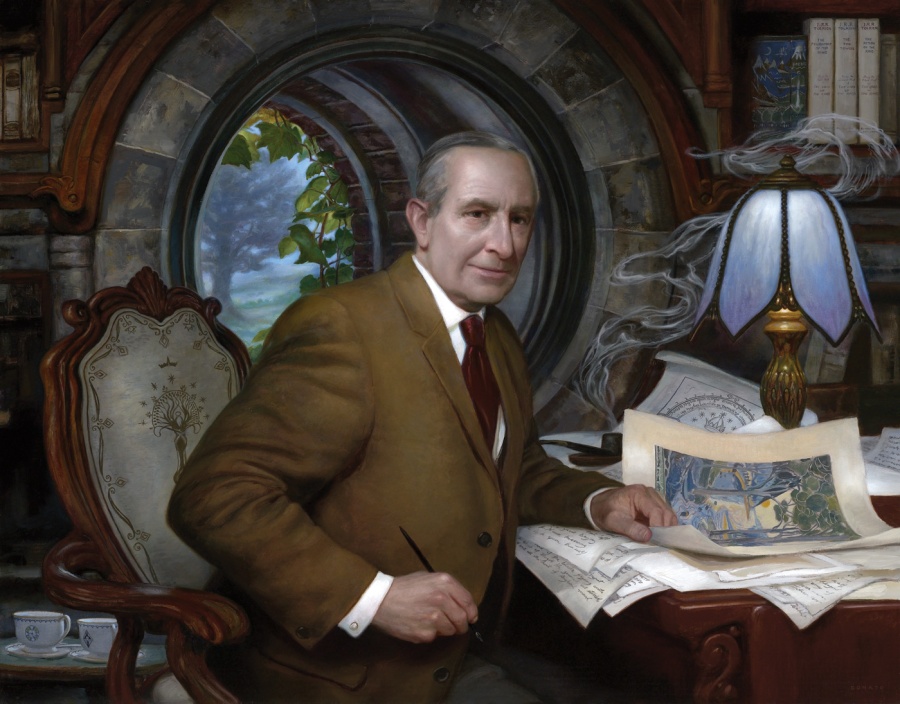
I want to thank Donato Giancola for allowing me to use his stunning portrait of J.R.R Tolkien as the featured image for this project. If you would like to purchase a print of this painting, they are available on his website!

If you would like to contribute your own experience, you can do so by using the form on the contact page, or by emailing me directly.

Now, on to Don Standing’s responses:


How were you introduced to Tolkien’s work?

Around the time I was starting high school, I was reading a fair bit of Conan and Sword and Sorcery stuff. I remember seeing on the cover of many books variations of “Not since Lord of the Rings…”. And so, like water circling a drain, I bought my first copy of Fellowship of the Ring. That was about 50 years ago.

What is your favorite part of Tolkien’s work?

Favourite part? If that means favourite work, then The Silmarillion then Smith of Wootton Major. If that means favourite part of Lord of the Rings, then Book I. If that means favourite aspect of the writing, then tone. If that means favourite character, then Middle-earth

What is your fondest experience of Tolkien’s work?

I just listened to an interview with author Julian Barnes who said, “I don’t believe in God, but I miss him.” This resonates with me and I think that may be my answer. The Silmarillion, as the blurb on my edition says, “approaches the mythic”. I don’t know what that is supposed to mean, but for me there is a holiness to it, an exaltation. It is a paean to wonder and awe – things I miss in this world.

On another level, introducing my son to Tolkien: I have an illustrated copy of The Hobbit and I would retell the story using the illustrations when he could barely talk. He called Thorin and Company “dorfs” and, in the double page spread illustration of the Battle of Five Armies would name the orcs: always the last one named was “Jibby”. Fond memories.

On another level, rediscovering and re-experiencing the works through Signum University, the Tolkien Professor, and The Prancing Pony podcast.

Has the way you approach Tolkien’s work changed over time?

I wouldn’t say “approach” particularly. I used to read Lord of the Rings yearly, but haven’t in many years now. I find that I have become rather Smeagol-ish in that I am very interested in the beginnings of things: word origins, pre-history, etc. As I write this, I see that that is probably very Tolkien too. Ironic that the character that, in some ways, was like the author, becomes Gollum.

Would you ever recommend Tolkien’s work? Why/Why not?

Probably not, although I certainly have. Most people who would be interested already have read it.

As mentioned above, I am interested in beginnings. I have oftentimes seen a comedy routine on tv that is the ancestor of some original bit from the 50s (for example). When I see the original, I am often disappointed by how bland it is. I wonder if that would be the same for Tolkien. Because he has virtually taken over the world and is everywhere, new readers (those used to Game of Thrones for example, or Harry Potter) may not be as appreciative as we who read it when the world was young.

LotRFI Pt.36–Concerning Faramir

Most people that I have talked to see Faramir as an unblemished ray of hope in his interactions with Frodo and Sam. I, however was not very optimistic when the hobbits met Faramir. He and his men sneak up on the hobbits, ambush them, and abduct them, taking them to a secret cave. To me, these were not the actions of an ally, they were the actions of an enemy. The interview between Faramir and Frodo in the cave heightened my suspicions of Faramir before it alleviated them.


The way that Faramir talks to Frodo in their first discussion conveyed mistrust and ultimately foreshadowed conflict to me. It was frequently confrontational and on the verge of being rude. I applauded Sam when he interjected, claiming that

‘He has no right to talk to you so’ (TT, IV, V, 665).


faramir
Image copyright Greg and Tim Hildebrandt

Sam’s perspective closely mirrored my own here. The fact that Faramir checks his bravery and then reveals that he is Boromir’s brother seemed ominous to me. I thought that certainly the corruption which drove Boromir to desire the Ring (remember, I though Boromir a ‘fallen’ man until his death redeemed him) would certainly also claim someone so closely related. This news was foreboding.

In their second, more private conversation, Faramir began to win me over with his fair words. He seemed to have a good sense of the struggles in the world, he lamented the loss of Gandalf, and he showed true compassion for his brother, even though he admitted his brother’s pride and arrogance. Once again, Sam encapsulates my perspective on Faramir:

‘He may be all right…and then me may not. Fair speech may hide a foul heart’ (TT, IV, v, 675).

I have to say that, throughout their encounter with Faramir, I held with Sam’s opinions very much Indeed, I would say that I identified with Sam the most in this encounter with one exception: when he lets slip the fact that the Ring is with them and is Isildur’s bane.

Faramir’s monologue which follows this revelation felt the same as Galadriel’s to me in my first reading. He says:

‘So that is the answer to all the riddles! The One Ring that was thought to have perished from the world. And Boromir tried to take it by force? And you escaped? And ran all the way — to me! And here in the wild I have you; two halflings, and a host of men at my call, and the Ring of Rings. A pretty stroke of fortune! A chance for Faramir, Captain of Gondor, to show his quality! Ha!’ (TT, IV, v, 680-1)

Just like with Galadriel’s monologue, I thought that this speech was the Ring influencing Faramir. He was tempted to take the Ring and use it for his own, to complete the quest of his fallen Brother. When he holds true to his earlier promise to leave the Ring with Frodo, I thought he had managed to overcome his temptation, just as Galadriel had. In all, this interaction was quite an emotional journey for me!

Where Do We Go From Here?

In the remainder of TT​, I want to talk about Shelob, Smeagol, and Sam’s Meta Moments.

What Do You Think?

How did you react to Faramir when you first met him?
When did you first trust Faramir?
​Did I miss anything? Let me know!

WelCZa’s Experience– Tolkien Experience Project (34)

This is one in a series of posts where the content is provided by a guest who has graciously answered five questions about their experience as a Tolkien reader. I am very humbled that anyone volunteers to spend time in this busy world to answer questions for my blog, and so I give my sincerest thanks to WelCZa and the other participants for this.

To see the idea behind this project, check out this page

I want to thank Donato Giancola for allowing me to use his stunning portrait of J.R.R Tolkien as the featured image for this project. If you would like to purchase a print of this painting, they are available on his website!

If you would like to contribute your own experience, you can do so by using the form on the contact page, or by emailing me directly.

Now, on to WelCZa‘s responses:


How were you introduced to Tolkien’s work?

Back at 1995(ish) I was playing local version of DnD and I loved it. And one of my friends/schoolmates I was playing it with told me, that I should read Hobbit and that DnD is based on it. So first I read borrowed Hobbit and next I bought it as well as the LotR and Silmarilion (I was around 15 so it wasn’t all at once).

What is your favorite part of Tolkien’s work?

Definitely The Two Towers and its battle of Helms deep, where Gimli and Legolas start counting killed enemies and compete in it. IMO it’s one of the most hilarious and touchy part of the story if not “The most…” (even besides destroying of The Ring).

What is your fondest experience of Tolkien’s work?

Definitely Lord of the Rings online. An MMORPG based on, well, LotR. There is nothing more to say.

Has the way you approach Tolkien’s work changed over time?

When I was young, Tolkien’s work was bible to me. Now it is just awesome saga, besides others.

Would you ever recommend Tolkien’s work? Why/Why not?

Definitely. Why? Short answer: Why not? Longer answer: Tolkien was a genius storyteller who even invented at least two alphabets (elvish and dwarven) and at least basics of two languages.


LotRFI Pt.35–The Black Gate

In subsequent reads, the chapter around the Black Gate only keeps my attention in the description of the troop movements around the Gate. I must admit that this portion of the adventure has the lowest re-readability score from me. In my first read, however, this was a very tense scene. The stakes were so high: would Frodo dare to try to enter Mordor through such a crowded passage, and how could he possibly succeed?

morannon-black-gate_orig
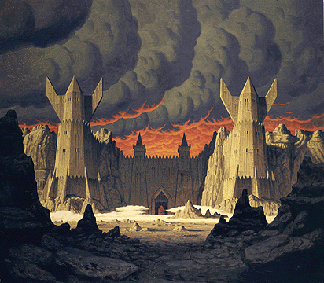
Image copyright Greg and Tim Hildebrandt

Sam accurately sums up my belief in their ability to pass the Gate when he succinctly posits:

‘Well, here we are…Here’s the Gate, and it looks to me as if that’s about as far as we are ever going to get’ (TT, IV, III, 637).

The two hobbits begin to despair of completing their quest, but also show determination to try. At this moment the hobbits portray what I have already mentioned as ‘northern courage.’ Although I could pick up on this kind of boldness in the face of death, and it resonated with me, I did not have the terminology or intellectual appreciation of what it was. I did have a visceral reaction to such moments in my gut, and I admired the courage in the sentiments.

Gollum’s revelation of a second way into Mordor was very complex. Instinctively, I wanted to jump at the opportunity, like someone who tries to take advantage of a flash of light in a dark room to gain a comprehensive look around. This impulse was checked by the wariness that the hobbits have of Gollum’s treachery. I must admit, though, that I was far more inclined to follow the one evil creature instead of trying to face the kind of army they had just seen. In the end, I was relieved at their decision to Follow Gollum.

Where Do We Go From Here?

One word: Faramir!

What Do You Think?

What was your first impression of the Black Gate?
How have your subsequent readings of this passage changed?
​Have I missed anything? Let me know!

Jane Patricia’s Experience–Tolkien Experience Project (33)

This is one in a series of posts where the content is provided by a guest who has graciously answered five questions about their experience as a Tolkien reader. I am very humbled that anyone volunteers to spend time in this busy world to answer questions for my blog, and so I give my sincerest thanks to Jane and the other participants for this.

To see the idea behind this project, check out this page

I want to thank Donato Giancola for allowing me to use his stunning portrait of J.R.R Tolkien as the featured image for this project. If you would like to purchase a print of this painting, they are available on his website!

If you would like to contribute your own experience, you can do so by using the form on the contact page, or by emailing me directly.

Now, on to Jane Patricia’s responses:


How were you introduced to Tolkien’s work?

I was looking for fantasy books to read and stumbled upon the trilogy. Since I’ve heard about the movie, I decided to give it a read. Best decision ever

What is your favorite part of Tolkien’s work?

The way he managed to create new language and a world that is familiar but also wonderful. You can feel his passion towards it. His imagination is beautiful and a great place to be when you’re getting tired of real life. For the books I like Silmarillion the best, especially the way he told about the creation of the world.

What is your fondest experience of Tolkien’s work?

During The Hobbit movie trilogy, my longtime friends and I would make time to reunite in our hometown, get together and go to the cinema on those 3 years. It was before we all got busy with our work and family, so the movies were dear to me.

Has the way you approach Tolkien’s work changed over time?

I simply read it when I was younger but now when I re-read it, I began to look at it from a different side, he influences how I imagine things. Sometimes I’d discuss the books/movies with my other Tolkien loving friends. Well we might not get that deep, but it’s something ��

Would you ever recommend Tolkien’s work? Why/Why not?

Yes! Absolutely! I’ve been recommending it to my friends since the first time I found LOTR. His imagination and penmanship is a work of art. Something that is not to be missed in one’s lifetime.


You see more from Jane Patricia on Twitter!

LotRFI Pt.34–Sam and His Creature Comforts

I was always a very curious, some would say nosy, child. I was always trying to understand why things happened or why people made the choices they made. I was a big fan of “reading into” things ever since I discovered it as an activity. While this tendency led me into hot water many times, I had not yet learned to dull this passion by the time I read LotR. One of the activities I “read into” the most was Sam’s constant attention to Frodo’s needs and comfort—don’t get ahead of me here, or maybe you will end up in hot water.

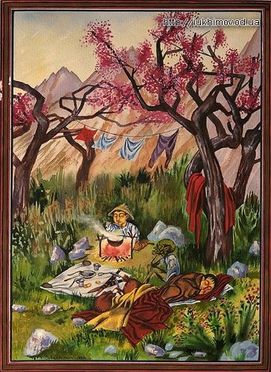
Perhaps the most notable example where I uncovered Sam’s motivation is when Sam attempts to cook a nice stew for Frodo in Ithilien. The reader hears Sam’s thoughts in this passage, which make some clear indications about the emotions that inspire him to make the meal:

‘I love him. He’s like that, and sometimes it shines through, somehow. But I love him, whether or no’ (TT, IV, iv, 652).

‘Too thin and drawn he is…Not right for a hobbit’ (TT, IV, iv, 653).

rabbit-stew-tolkien
Image copyrights Sergei Yukhimov

Sam’s compassionate nature in general, and his affection for Frodo especially, are not disguised in the tale. What is interesting is how those feelings manifest themselves in, essentially, attempting to care for Frodo as if he were Frodo’s parent—more specifically his mother, as foreshadowed by David Craig, but I would not have made this more specific observation as a child. Sam is attempting to preserve Frodo’s sense of security and his sense of comfort: trying to remind Frodo of home and the good things which life has to offer. This was an interesting observation for me when I first realized it. It was probably easier for me to notice than some others because I grew up in the American south—where the stereotype is that a mother expresses love through food. In any case, I always had a soft-spot for affection expressed through quiet moments of understanding and small gestures of love (I did mention that Call of the Wild was one of my favorite books, remember).

This deep friendship between Frodo and Sam was something which I cherished as a young reader. While I frequently compared my relationships to the ones in the book, I do not know if I ever considered if I had a relationship quite like the one between Frodo and Sam, I do not think so. While I did not have a relationship like this, it did not seem odd to me that they should be so close. Many fans have questioned the feelings between Frodo and Sam, and many scholars have pointed out that the overtones that readers notice to make such assertions are indicative of a type of friendship between men that existed in a different time. As a young reader, none of this occurred to me. I thought their fondness a perfectly natural thing. I realized that I did not have a friendship like theirs, but it was not until I started growing up that I realized that men in my culture do not tend to have such close bonds or at least express affection as openly and deeply.

Where Do We Go From Here?

I want to journey to the Black Gate, then visit with Faramir!

What Do You Think?

What did you make of Sam’s tendency to, essentially, nurture Frodo?
How has your reading of their relationship changed over time?
Did I miss anything? Let me know!

John David Cofield’s Experience–Tolkien Experience Project (32)

This is one in a series of posts where the content is provided by a guest who has graciously answered five questions about their experience as a Tolkien reader. I am very humbled that anyone volunteers to spend time in this busy world to answer questions for my blog, and so I give my sincerest thanks to John and the other participants for this.

To see the idea behind this project, check out this page

I want to thank Donato Giancola for allowing me to use his stunning portrait of J.R.R Tolkien as the featured image for this project. If you would like to purchase a print of this painting, they are available on his website!

If you would like to contribute your own experience, you can do so by using the form on the contact page, or by emailing me directly.

Now, on to John David Cofield‘s responses:


How were you introduced to Tolkien’s work?

I first came into contact with J.R.R. Tolkien and Middle-earth in the summer of 1968. I was 11 and during summer vacation I subscribed to a newsletter for grade school children put out by the My Weekly Reader organization. One issue had a long feature article about these amazing books written by a professor in England. There were illustrations of hobbits and hobbit holes and one of Gollum watching Frodo at the Cracks of Doom. I was fascinated by what I read in that newsletter but the local library didn’t have any Tolkien books, so I put the newsletter aside and went on to other things. Then in April 1969 when I was 12 and in the 6th grade I spotted The Hobbit in my elementary school library. I checked it out and fell in love with it from the first page. That summer I bought paperback copies of The Hobbit and The Lord of the Rings, and I’ve never been without at least one copy of each ever since.

What is your favorite part of Tolkien’s work?

It’s difficult to narrow down to a favorite part, but as a historian and former high school history teacher I know I’ve always enjoyed sections like The Council of Elrond where a lot of the background history is presented.

What is your fondest experience of Tolkien’s work?

Again its difficult to narrow down to a fondest experience, but I know that I first read The Lord of the Rings during an unhappy time in my family’s history. We had made an unfortunate move from one town to another where none of us were happy and where we only stayed for 6 months before moving back to the first town. So during those months The Lord of the Rings was a distraction and a source of happiness for me.

Has the way you approach Tolkien’s work changed over time?

As a twelve year old and as a teenager I read Tolkien for the adventure and the story. After nearly 50 years I still love the adventure and story, but I’m also much more aware of the deep values behind the surface plot. Additionally, so many years of reading has left a patina of memory on each page, and I can often remember reading a certain passage many years earlier, reminding me of some of the thoughts and reactions I had to it then.

Would you ever recommend Tolkien’s work? Why/Why not?

I would definitely recommend reading Tolkien, with the caution that it can become a central life theme. Not that that’s anything but positive, but people do need to be aware that “the book” is more than just a book to me and to many others.

Letters From Father Christmas Reading Plan

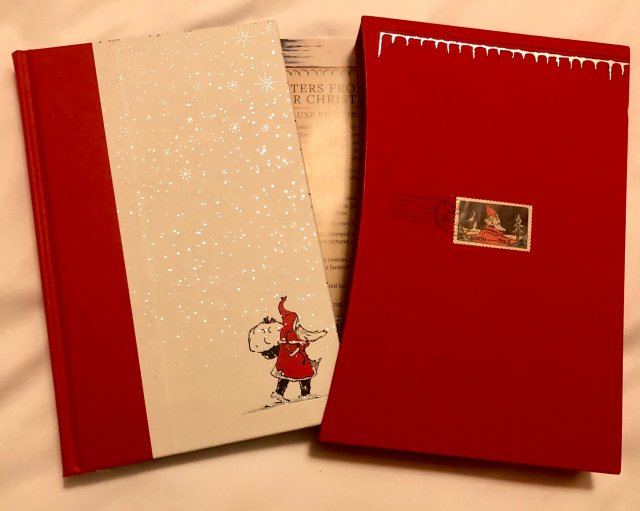
A few years ago, my wife and I began a fun tradition that we reenact every year during the holiday season: we read through Letters From Father Christmas by J.R.R.Tolkien!

5158HA33FqL

We don’t just sit down and read the whole book cover-to-cover. Instead, we take turns reading a letter or two each day, spreading the fun of the event over a few weeks!

If you want as many letters as possible, you want to make sure to get a copy of the revised edition. Almost any book published after 2004 will have this added material. If you want a more interactive experience, though, you can’t beat the 1995 version, with removable letters!

The newer version is the easiest to find, it is even available on Amazon.

(If you have to have your cake and eat it too, like me, you get both editions so you can have the pull-out letters, but still read all the ones left out of the earlier version!)

I now have the Deluxe Edition published by HarperCollins and am looking forward to using it this year! I will probably use it in conjunction with the 1995 version. (I will be updating the reading plan with the Deluxe edition letters in December of this year, and i will note the edits when they are inserted.)

Why do we love reading this little book each year? To be honest, it is just plain fun! The character of The Great Polar Bear is hilarious and it is fun to see the little arguments that he and Father Christmas get up to! It is also fascinating to think about what is going on in the lives of the Tolkien family and in the larger world year by year and wonder how much that influenced the letters! So there are several levels that keep us coming back!
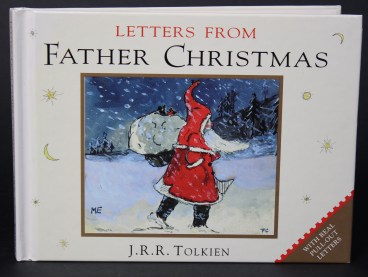
038339_e938480dad5da4ce620a54e3a5479cb3.jpg

I thought it might be fun to give an example of our typical reading schedule in case anyone else wants to give it a go! I also include a few thoughts/comments mixed in!

Day 1- Read letters from 1920, 1923, and 1924

–In these letters it is plain to see that there is no real story developed, just a fun activity of father writing to child.

Day 2- Read letter from 1925

–This is where the fun really begins. The introduction of the Polar Bear adds conflict and drama to the story, allowing plot to develop in subsequent letters!

Day 3- Read letter from 1926

–In this letter and the next the character of the Snow Man is introduced but nothing much comes of him. The letters are in dark envelopes with white writing. Did the story come before the envelopes, or was it an attempt to explain the envelopes Tolkien used?

Day 4- Read letter from 1927

Day 5- Read letter from 1928

–This letter and the next are a couple of my favorite letters! The Polar Bear is at his clumsy best, and the wordplay in the 1928 letter is delightful!

Day 6- Read letter from 1929

Day 7- Read letter from 1930

–The images fro this letter have an almost comic book quality in their storytelling ability!

Day 8- Read letters from 1931

–This year has multiple letters and shows Tolkien at his best! The letters start in October and employ many fonts and voices! The art is exquisite with one of my favorite illustrations of Father Christmas and a marvelous mountainscape!

Day 9- Read letters from 1932

–One of the longest letters comes this year! It details the harrowing adventure to find Polar Bear and also gives a copy of cave drawings by men and goblins!

Day 10- Read letter from 1933512652
–This year there is a large fight with the Goblins, and the art features one of the most iconic images of the Polar Bear!

Day 11- Read letter from 1934

–A shorter letter, but a stunning drawing of a tree all decorated for the holidays!

Day 12- Read letter from 1935

–The length picks up again, and there is more detail on the other bears, a favorite topic around our house.

Day 13- Read letter from 1936

–This letter employs the device of an elf scribe because Father Christmas and Polar Bear are too busy to write. This voice is very different from the others! Interestingly, a goblin alphabet is also included in this year’s letter!

Day 14- Read letter from 1937

–This is one of the most stylistically complex letters of the bunch. The voices of the elf scribe and Polar Bear argue back and forth throughout he letter, making for delightful banter!

Day 15- Read letter from 1938

–There are no flashy pictures in this letter (which is mentioned specifically), but we see Father Christmas try his hand at some poetry. Also included is some unflattering commentary by Polar Bear!

Day 16- Read letters from 1939 and 1940

— These years have some very short letters, but each has a remarkable picture. Enjoy!

Day 17- Read letter from 1941

–A longer letter than the previous years, it shows influence of war and conflict. There are some melancholy tones among the cheerfulness shown here. Is it all about the war, or is it also a note of a father who realizes that his youngest child is growing up?

Day 18- Read letter from 1942

–Priscilla didn’t send a letter this year. Father Christmas sends his last long letter giving updates about the goings on in his area and hoping the best for the Tolkien family.

Day 19- Read letter from 1943

— The final letter is a short farewell letter. Melancholy but sweet.

I hope you enjoy the book as much as we have! It is a great way to spend a few minutes each day getting into the holiday spirit!
EIYO_RjX0AI9ecn

LotRFI Pt. 33–Of The Dead Marshes

I like to credit Tolkien as the first author I ever read whose use of structure or style to elicit emotion I became aware of. I always knew that writers used plot to guide the reader, but this was something different. It started in the Shire. I became anxious that the hobbits should be off and that the story was taking so long. Then I realized that this was probably the same kind of emotion which Frodo must have: an anxiety of leaving, but an anxiousness to start.

the-dead-marshes-by-anke-katrin-eissmann
Image copyright Katrin Eissmann

This realization opened literature to me. I may very well have been projecting this back into the story, but it was a significant factor in my enjoyment of the story. I realized, for the first time, that the writer was trying to take my mood into account in his style or method of telling the story, not just with the plot itself.

This feeling redoubled for me as I went through the Marshes. The Dead Marshes were such a dreary place. I do not know if it took me longer to read the Frodo and Sam half of TT, but it certainly felt like it did. I felt like I plodded along through these sections at a miserably slow pace. I think the consistently dark landscape and the unrelenting sense of foreboding were tiring to me. Additionally, reading Gollum’s lines was difficult. There are a lot of linguistic complexities which made me slow down.

In all, my reading experience of book IV was very different form my experience of book III. I must admit that I enjoyed the story surrounding Rohan much more than I enjoyed the darker tale of the approach to Mordor. It is not until much later that I began to appreciate each book, and the latter grew in my estimation.

Where Do We Go From Here?

I want to talk a little bit about Sam and his emphasis of creature comforts.

What Do You Think?

Was your reading experience of the second half of TT different from that of the first?
How did you feel while reading these passages?
​Did I miss anything? Let me know!