Our guest this week is a fantastic animator and author: Molly Ostertag!
Molly is known for her work on several animated series, including Star vs. The Forces of Evil, The Owl House, and ThunderCats Roar. She is also a New York Times Bestselling author who enjoys writing Lord of the Rings fanfiction and fan comics. Her most exciting recent work is her award winning The WitchBoy series. I am so delighted to share our interview with you, where we talk about being her experience as a fantasy writer and a Tolkien fan!
Please consider supporting the Podcast on Patreon!
This is one in a series of posts where the content is provided by a guest who has graciously answered five questions about their experience as a Tolkien fan.
To see the idea behind this project, or if you are interested in sharing your own, visit the project homepage. If you enjoy this series, please consider helping us fund the project using the support page.
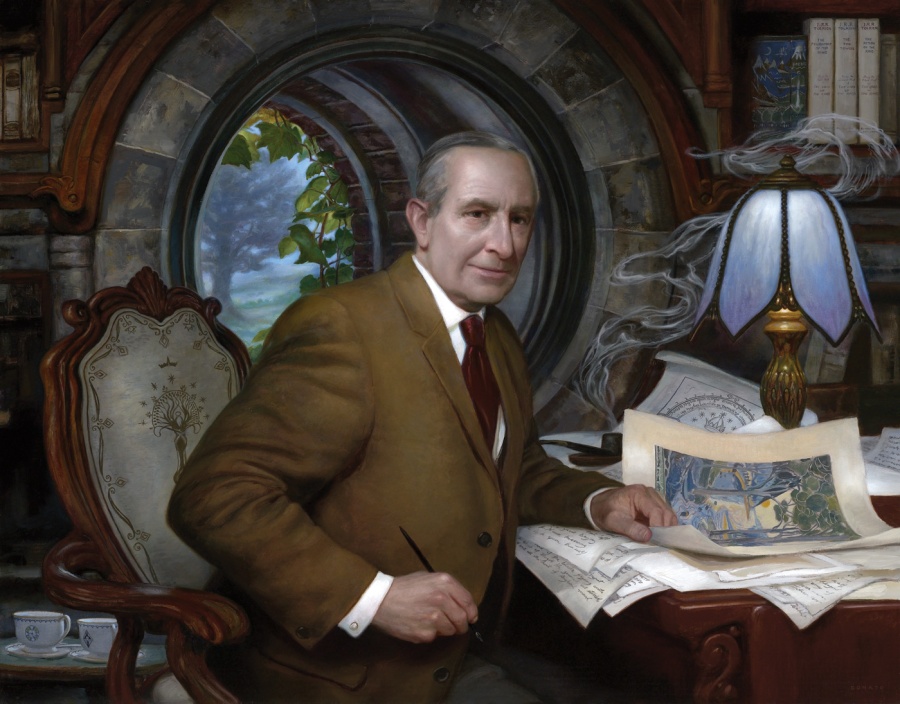
I want to thank Donato Giancola for allowing me to use his artwork for this project. Prints are available on his website!
Now, on to J.C.D.’s responses:
1. How were you introduced to Tolkien’s work?
I was initially introduced to Tolkien through the Lord of the Rings movies in the early 2000s. When I got older, late college years, I read The Lord of the Rings for the first time. It brought me to a different world; a world a bit simpler yet not one of a utopian quality. I was sucked in from there.
2. What is your favorite part of Tolkien’s work?
There are two things in a broad sense that I truly love about Tolkien’s works. One is that they take me to a simpler time and place. The agrarian world of the Shire and of Rohan, the ancient grandeur of Gondor, the craft and lore of the elves all make me long for simpler times in our own world. In our world that, to me, seems more chaotic, more isolated, and more downcast as technology and man-made structures take more and more control of our everyday lives, these stories represent the antithesis to that. Secondly, the images of redemption that span the story are beautiful. The redemption of people and places throughout the tales never get old. I’ll add one more very tangible thing I love. My favorite part of any of his books is when Gandalf confronts the Lord of the Nazgul at the City Gate. Chills every time!
3. What is your fondest experience of Tolkien’s work?
I think my fondest experience of his works is simply the resonance it leaves with me. The thoughts it produces, the people it introduces me to, the other books it leads me to, the imagining of what it would have been like to be part of the Fellowship or in Rivendell. It’s that continued experience and enjoyment in various forms that is really something I love.
4. Has the way you approach Tolkien’s work changed over time?
My approach has certainly matured as I have. I think more about the peace and homeliness of the Shire than I once did. I think more about the destruction of the Shire than I once did. Also, my approach has led me deeper into Tolkien scholarship just for fun!
5. Would you ever recommend Tolkien’s work? Why/Why not?
Of course I would! Jump right in! Don’t wait any longer!
This is one in a series of posts where the content is provided by a guest who has graciously answered five questions about their experience as a Tolkien fan.
To see the idea behind this project, or if you are interested in sharing your own, visit the project homepage. If you enjoy this series, please consider helping us fund the project using the support page.
I want to thank Donato Giancola for allowing me to use his artwork for this project. Prints are available on his website!
Now, on to Carissa Jones’s responses:
1. How were you introduced to Tolkien’s work?
My first introduction to Tolkien was seeing previews for the LOTR movies when I was in high school. I had never heard of LOTR previously, and the movies looked rather unappealing to me. Fast forward a few months, and a friend invited me over to watch movies. We had a standard agreement for our movie nights that we each got to pick one movie (back when renting them from the store was still a thing). She picked The Fellowship of the Ring, and I was a bit annoyed. Now, however, I am SO GLAD she did. I ended up loving the movie and bought myself the trilogy before I even watched the next two.
2. What is your favorite part of Tolkien’s work?
This is a tough one. I have a hard time choosing favorites of anything, and there are so many great options for this! I’ll have to settle for my top three: 1) the character of Strider/Aragorn, 2) Tolkien’s definition and description of eucatastrophe, and 3) the way he draws out the extraordinary from the common.
3. What is your fondest experience of Tolkien’s work?
Watching The Fellowship of the Ring with that friend in high school and entering the world of Middle-earth for the first time.
4. Has the way you approach Tolkien’s work changed over time?
Yes. I am preparing to begin my dissertation and will be writing on the Inklings, so I currently approach Tolkien from a more scholarly perspective, but I still enjoy getting lost in the narratives when I can.
5. Would you ever recommend Tolkien’s work? Why/Why not?
Absolutely! Tolkien is a very engaging writer and has a remarkable way of presenting timeless themes that allows the reader/viewer to learn from the characters while also recognizing his or her own capacity for greatness. As a Christian, I also appreciate his theological insight and ability to weave biblical themes into his work.
Our guest this week is the first one we have had who worked on the Peter Jackson adaptations of The Lord of the Rings!
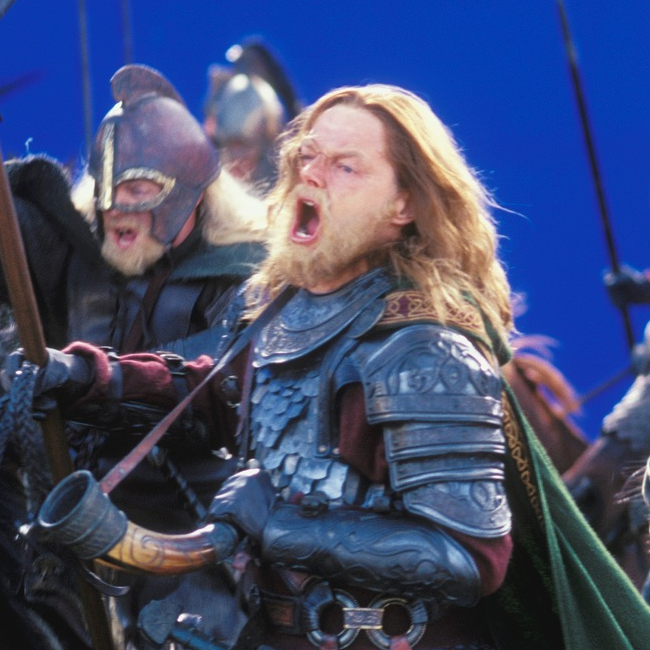
Bruce Hopkins played the character Gamling in both The Two Towers and The Return of the King at the beginning of the millennium. He shares with us his own journey as a Tolkien reader, as well as some stories from the set and his personal trek across New Zealand! His trip across New Zealand is available as a mini-series on YouTube!
Please consider supporting the Podcast on Patreon!
This is one in a series of posts where the content is provided by a guest who has graciously answered five questions about their experience as a Tolkien fan.
To see the idea behind this project, or if you are interested in sharing your own, visit the project homepage. If you enjoy this series, please consider helping us fund the project using the support page.
I want to thank Donato Giancola for allowing me to use his artwork for this project. Prints are available on his website!
Now, on to Nick Polk’s responses:
1. How were you introduced to Tolkien’s work?
I was introduced to Tolkien’s work through the Rankin/Bass animated adaptation of The Hobbit. I don’t have a lot of memory associated with watching it, but according to my parents, I watched The Hobbit frequently as a child under ten years old. In sixth grade, I was assigned The Hobbit for reading. From there I became aware of Peter Jackson’s adaptation of The Lord of The Rings. I quickly rented The Fellowship of the Ring and The Two Towers from Blockbuster and watched them on repeat. Not long after, my family went to see The Return of the King at our local movie theater. From there, I only watched the movies on repeat. I actually didn’t seriously approach The Hobbit, The Lord of the Rings, or The Silmarillion until college. When I first read through those books, I became obsessed.
2. What is your favorite part of Tolkien’s work?
My favorite part of Tolkien’s work–particularly the legendarium–is the veiled religiosity throughout it. Tolkien was a Roman Catholic and I have experienced that influence in my own readings of the Legendarium, but I love that it is not explicit. Like many other aspects of Tolkien’s work, the religiosity and religious themes can be approached universally. One does not have to be a Roman Catholic, a Christian of any kind, or even a theist to appreciate Tolkien’s creativity. There is value in the Ainulindale whether or not someone is an atheist, Buddhist, or Methodist. I find spiritual fulfillment in Tolkien’s works even if I have a very different worldview than Tolkien’s.
3. What is your fondest experience of Tolkien’s work?
I am currently in a Legendarium reading group. We made our goal for 2021 to begin and meet virtually during the pandemic, and meet in person when it is safe to do so. We have already started The Silmarillion, and I have already had a blast with our group message and brief discussions on it.
4. Has the way you approach Tolkien’s work changed over time?
My initial approach to the Legendarium in college helped me reformulate and reinforce my faith. I come from a Wesleyan-Nazarene Christian background and I was struggling with whether or not I could consider myself a “Christian” at that point in my life. I have always been interested in theology and it is what I did my undergraduate degree in. Tolkien has not been spared my theological lenses. While that is still my primary interest in Tolkien (besides the love of the tales), I have really found a curiosity for those that engage Tolkien on a critical literary level. Approaching Tolkien literarily has help widen my scope of appreciation for Tolkien and the Legendarium. It has also helped me broaden my understanding of Tolkien and the important approaches to the Legendarium, rather than pigeon-holing my approach to a theological level.
5. Would you ever recommend Tolkien’s work? Why/Why not?
I would recommend Tolkien’s work to anybody. Now, I would not suggest Tolkien’s work to others in the tone of a fanatic, but I believe there is something for everyone in Tolkien’s work if one is open to interacting with it. Tolkien radically changed my worldview, my extracurricular and academic interests, and even the direction of my life. If someone is able to develop some form of relationship with Tolkien’s work, I see that as a win.
This is one in a series of posts where the content is provided by a guest who has graciously answered five questions about their experience as a Tolkien fan.
To see the idea behind this project, or if you are interested in sharing your own, visit the project homepage. If you enjoy this series, please consider helping us fund the project using the support page.
I want to thank Donato Giancola for allowing me to use his artwork for this project. Prints are available on his website!
Now, on to Manuel’s responses:
1. How were you introduced to Tolkien’s work?
My first contact with Tolkien´s work was through the movies at age 7. I was visiting my Uncle (who later found out was a huge Tolkien fan) and he was watching The Fellowship of the Ring on TV. Sadly, I can´t exactly remember what it was that hooked me, but by next year I was watching The Two Towers in the cinema with my parents (they both fell asleep), and The Return of the King the year after that, this time with some of my closest friends.
After re-watching the movies several times, I decided, on my Uncle´s advice, to buy the books and start this never ending, but equally amazing journey, of discovering Middle-earth and Tolkien´s work.
2. What is your favorite part of Tolkien’s work?
My favorite part must be the depth of his work. As a curious individual at heart, once I´m interested in something, I try to delve deeper into whatever it is that has my attention, often to be disappointed as there just seems to be nothing more than what is presented in the surface. With Tolkien this is never a problem.
I quickly became amazed and fascinated at how almost every single place, every single character (be it a main one or not) has a background or a backstory and that this is covered deeply in his other works, how everything is so deeply interconnected and beautifully imagined and written that you almost feel Middle-earth is real and you can learn about it in your History class in school.
3. What is your fondest experience of Tolkien’s work?
Probably sharing time with my friends. After watching the LoTR movies together many times, we decided to recreate the plot on a Dungeons & Dragons campaign.
The number of hours we spent recreating the maps, laughing, eating, not sleeping and playing are very close to my heart and something we will always remember.
Looking back, I was very fortunate to have such good friends to share this passion with.
4. Has the way you approach Tolkien’s work changed over time?
It certainly has. At a young age, when my strongest approach to his work was the movie adaptations, I was more interested in action and dialogues than anything else. As I’ve “matured”, reading the descriptions of the landscapes, the cultures, history, etc. are what interest me the most and what keeps me always hooked and marveled.
5. Would you ever recommend Tolkien’s work? Why/Why not?
Every time I get the chance! Whenever someone asks me who my favorite author is or what my favorite books are. Tolkien created a whole new genre of fantasy literature and world creation. Most of the people I know enjoy some sort of similar novels or movies / series, so I always recommend them to read the one who got it all started.
There are so many books that propose to be authoritative and essential to studying Tolkien and/or Middle-earth that I thought it might be helpful for me to put together a list of recommended books. This list is focused specifically on reference books: encyclopedias, dictionaries, atlases, guides, companions, etc.I have already addressed biographies in a separate post.
In a way, this will help readers interested in digging deeper to avoid texts that may have inaccuracies or fabrications.
I have split my list into books that I recommend and books that I do not recommend. There are, of course, many more reference works that I have not commented on. This is not meant to be an exhaustive list. I welcome feedback and additions in the comments!
Many thanks to Dimitra Fimi, Andrew Higgins, Jeremy Edmonds, James Tauber, Shaun Gunner, and Nelson Goering for sharing their thoughts with me as I compiled this list (any inaccuracies that persist, however, are my own)!
One final thing: I try to make as much public content as possible. So please, while you are here, look around the site at the resources and the archives. If you like what you see, come back often, and maybe even consider visiting the Support page.
Recommended
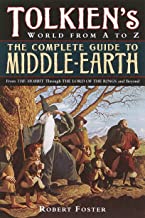
Tolkien’s World from A to Z: The Complete Guide to Middle-earth by Robert Foster
A strong candidate for the most useful reference book for Middle-earth. It offers simple definitions like a dictionary, and also has citation of where to find important passages (unlike the Tyler book below, which lacks the references).
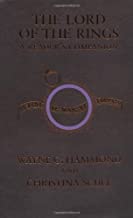
The Lord of The Rings: A Reader’s Companion by Wayne Hammond and Christina Scull
This is a very informative and helpful volume with a lot contextual information about The Lord of the Rings. It also includes some previously unpublished primary material.
2006 Mythopoeic Award Winner for Inklings Studies
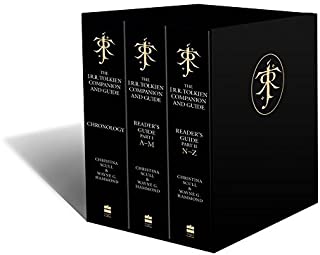
The J.R.R. Tolkien Companion and Guide (second edition) by Christina Scull and Wayne Hammond
This is an excellent resource and is essential for scholars. If you only want a casual introduction, however, this is not the book for you because of its heavy price tag. Please note that the newer edition has three volumes instead of two.
2007 Mythopoeic Award Winner for Inklings Studies
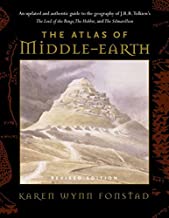
The Atlas of Middle-earth (Revised Edition) by Karen Wynn Fonstad
There are two books that propose to be atlases of Tolkien’s world (see the Strachey book below). This is the more popular of the two, and I must admit that I use it more often simply because it has maps for the first and second ages. It isn’t perfect, but it is certainly helpful.
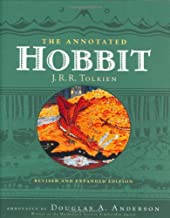
The Annotated Hobbit (Revised and Expanded Edition) by Douglas A. Anderson
This functions very similarly to the Hammond and Scull book above, but focuses in on The Hobbit with a lot of extra-textual information and context.
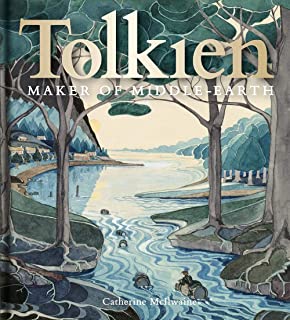
Tolkien: Maker of Middle-earth by Catherine McIlwaine
Although it’s original intent as a catalogue for the exhibition it accompanied does limit it’s scope (compared to other reference works) it is a very useful piece for knowing more about Tolkien and about artifacts in his life. Personally, I view it as more of a biography (which is why it is listed in my post about biographies), but I have caved to pressure to put it here as well. There is great production value in this book!.
J.R.R. Tolkien Encyclopedia edited by Michael D.C. Drout
This one is more of a specialist text, and the price reflects that. It is not essential to understanding Tolkien’s work, but it has a lot of entries that help to contextualize the work and explain different facets of it.
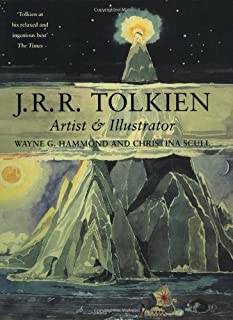
J.R.R. Tolkien: Artist and Illustrator by Wayne Hammond and Christina Scull
This text, along with The Art of the Lord of the Rings and The Art of The Hobbit (also by Hammond and Scull) are seminal works for looking at Tolkien’s achievements and development as an artist. Again, there is a very high production value on these books! (Not to be confused with other texts with similar titles but different editors.)
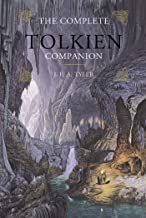
The Complete Tolkien Companion by J.E.A. Tyler
This newer edition incorporates material from Unfinished Tales and parts of History of Middle-earth, so don’t confuse it with the earlier editions with slightly different titles. A useful text but, as noted above, it lacks the references which would make it more useful.
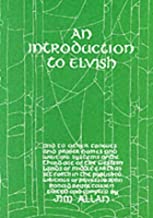
An Introduction to Elvish by Jim Allan
This is the best guide to elvish currently available. It is dated and there had been a lot of new material published since, but it is still a useful guide to methodology. There is ongoing work on Tolkien’s languages by the Elven Linguistic Fellowship. (See free resources below for more.)
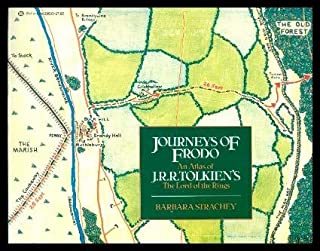
Journeys of Frodo by Barbara Strachey
This is a decent atlas, although it does have some problems with scaling. As I said above, this book is more specific than the Fonstad atlas so I end up not using it as much. (This one is a bit older so it is hard to find in as usable a condition, but the maps are all on a single page, so the part you want is never buried in the binding.)
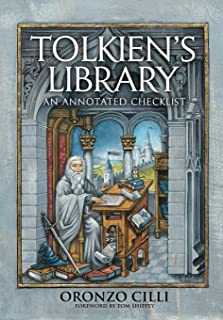
Tolkien’s Library by Oronzo Cilli
This book is an attempt to catalogue the books that Tolkien owned, read, or referenced. A couple of people have made qualms about parts of the text, but overall it remains a helpful guide.
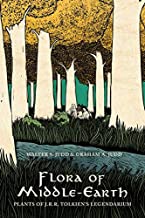
Flora and Fauna of Middle-earth by Walter S. Judd and Graham A. Judd
I have put this as the last recommended text because, in some ways, it is not strictly a reference work. At times, the authors speculate what plants could be the inspiration for or equivalent of those found in Middle-earth. This isn’t quite the intent of a stereotypical reference book, but it is an interesting resource nonetheless.
Not Recommended
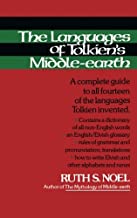
The Languages of Tolkien’s Middle-earth by Ruth S. Noel
An early attempt to make sense of Tolkien’s languages that has not aged well.
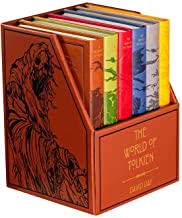
David Day Texts
David Day is frequently disparaged in discussions about Tolkien reference books. I will just mention two concerns: First, there are errors and spaces where Day seems to suggest that something is of Tolkien’s invention when it is in fact his own. Second, the various books with his name often seem to repackage the same information in different ways. (Day has claimed that the various reprints are the fault of his publisher.) Unfortunately, these reprints never seem to incorporate corrections to errors pointed out in previous editions.
It is best to avoid all David Day books.
Free Resources
Every fledgling scholar or fan wanting to dig deeper knows the importance of free resources, so here are some credible online resources to help you expand your knowledge pool:
Mythlore: this is the peer-reviewed journal of the Mythopoeic society. The journal is Open Access and is available online.
Journal of Tolkien Research: This is another Open Access Online journal that is peer-reviewed by very reputable Tolkien scholars.
LOTRProject.com: This website, created by Emil Johansson, has a lot of very useful resources like family trees, maps, and calendars
Elvish.org: This is the homepage for the Elvish Linguistic Fellowship, and it is the source for the most up-to-date information about Tolkien’s languages. Of particular note is this essay by Hostetter.
The Tolkien Art Index: Scholar Erik Mueller-Harder has compiled a useful index of every piece of art by Tolkien.
LR Citations: Another helpful tool by Erik Mueller-Harder that lets you cross-reference different settings and editions of The Lord of the Rings.
Ardalambion: This is an online guide to Tolkien’s invented languages.
Digital Tolkien: James Tauber has many useful projects in the work. The most complete is a catalogue of textual variants in print copies of The Silmarillion.
Tolkien Gateway: This is a fan-run online encyclopedia. It has good entries for many topics about Tolkien and his work.
As I said at the beginning, this is not an exhaustive list. I only had a couple of hours to spend pulling it all together. I welcome and encourage feedback in the comments! I will occasionally update this list to reflect new developments!
For this week’s episode of the Tolkien Experience Podcast, I am very excited to share our interview with the creator of Diverse Tolkien!
While she does not want me to use her name, the creator of Diverse Tolkien can be found on Twitter and Tumblr where she focuses on discussing anti-blackness in Tolkien’s work and in the fan community. She wanted me to let you know about her exciting event: Diverse Tolkien Week! This event will be on Twitter and Tumblr during the last week of February. Please listen to the episode to find out more and join in the event later this month!
Please consider supporting the Podcast on Patreon!
This is one in a series of posts where the content is provided by a guest who has graciously answered five questions about their experience as a Tolkien reader. I am very humbled that anyone volunteers to spend time in this busy world to answer questions for my blog, and so I give my sincerest thanks to Leith and the other participants for this.
To see the idea behind this project, check out this page.
I want to thank Donato Giancola for allowing me to use his stunning portrait of J.R.R Tolkien as the featured image for this project. If you would like to purchase a print of this painting, they are available on his website!
If you would like to contribute your own experience, you can do so by using the form on the contact page, or by emailing me directly.
Now, on to Leith Skilling’s responses:
1. How were you introduced to Tolkien’s work?
My father read The Lord Of The Rings aloud to me when I was probably about six, but I was much too young to truly grasp the story – that being said, I was entranced by the map of Middle-earth in the edition my family owned, and I would draw characters and scenes from the story on the book’s few blank pages. It’s safe to say Tolkien inspired my passion for art as well as for writing.
2. What is your favorite part of Tolkien’s work?
My favorite part is an overarching theme in The Lord Of The Rings and The Hobbit: the idea that simple people living simple lives can be heroic because of – rather than in spite of – their humility, their compassion, and their humanity.
3. What is your fondest experience of Tolkien’s work?
Being able to interact with some of the wonderful people in the Tolkien Community has been a joy and an unexpected blessing, especially during these trying times. Reading Tolkien’s works aloud to my family during this quarantine has also been a special personal experience.
4. Has the way you approach Tolkien’s work changed over time?
Until I read The Silmarillion, I had only acknowledged that Tolkien inspired in me a love of writing. But The Silmarillion opened my eyes to how deeply Tolkien’s works have changed the way I live my life. It’s a book that puts everything into perspective, I think, including the reader’s own experiences.
5. Would you ever recommend Tolkien’s work? Why/Why not?
I would recommend Tolkien’s work to anyone: especially nowadays. More than ever, it’s crucial that we understand the importance of empathy, and the need to protect and preserve the earth itself before it’s too late – Tolkien’s works are valuable for teaching both of those things, and for instilling in readers a responsibility to be the stewards of this Middle-earth that we need to be.
This is one in a series of posts where the content is provided by a guest who has graciously answered five questions about their experience as a Tolkien reader. I am very humbled that anyone volunteers to spend time in this busy world to answer questions for my blog, and so I give my sincerest thanks to Jon and the other participants for this.
To see the idea behind this project, check out this page
I want to thank Donato Giancola for allowing me to use his stunning portrait of J.R.R Tolkien as the featured image for this project. If you would like to purchase a print of this painting, they are available on his website!
If you would like to contribute your own experience, you can do so by using the form on the contact page, or by emailing me directly.
Now, on to Jon B’s responses:
1. How were you introduced to Tolkien’s work?
My parents had a copy of The Hobbit sitting on a bookshelf, and a thought I’d give it a try. Over 40 years later, I’m still obsessed.
2. What is your favorite part of Tolkien’s work?
I love Tolkien’s world-building. You really get a sense of each story taking place in a world that’s much larger than the individual story. I’ll also take the opportunity to plug my favorite somewhat obscure Tolkien story – “Athrabeth Finrod Ah Andreth,” from Morgoth’s Ring.
3. What is your fondest experience of Tolkien’s work?
Seeing the film of The Fellowship of the Ring, and being amazed that somehow Peter Jackson had gotten into my head and produced the look and feel of Middle-earth perfectly.
4. Has the way you approach Tolkien’s work changed over time?
I have begun in recent years to try to consider Tolkien’s actual philosophy and thinking rather than just reading the stories as stories.
5. Would you ever recommend Tolkien’s work? Why/Why not?
Absolutely. I get such joy out of it – why wouldn’t I want to share that with others?












 Luke Shelton PhD