LotRFI Pt. 6–The Barrow Wights

For some reason, I always equated the Barrow wights with the Black Riders chasing our band of hobbits through the Shire. I imagined that they were somehow related or in collusion. Perhaps it was just my way of simplifying the danger that the company faced, thinking that evil was a single, combined force instead of a multi-faceted and diverse set of challenges or opponents. It was not until much later, probably around a decade, that I began to realize that there were some textual reasons why I made this assumption as a first-time reader.

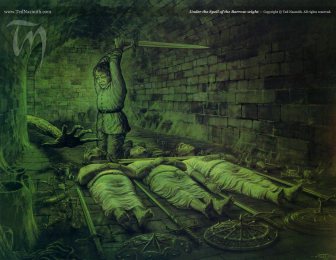
Under the Spell of the Barrow-wight, by Ted Nasmith
Image copyright Ted Nasmith

As a twenty-something, I wrote a word study focusing on Tolkien’s use of   glimmer throughout LotR. This project led me to Shadow, which displays the development of the wights and Riders through several drafts. In a prior version of this text, J.R.R. Tolkien describes how Tom Bombadil “seemed to think that the Riders and Barrow wights had some kind of kinship or understanding.”

Perhaps this assumption which is present in the previous iterations of the text still lingers in some of the creative decisions in the published text. While the two dangers are not in collusion as-published, the characterization of the Riders and the wights is very similar, down to the word choice (as I argued, somewhat, in that earlier paper).

I am not naïve enough to suggest that I was able to detect Tolkien’s earlier intent as a young child. What I would assert, however, is that Tolkien revised his text in such a way as to leave this connection between the Riders and the Barrow wights as a possibility for readers to interpret into the text, even if he does not suggest the link outright.

Where Do We Go From Here?

I hope to be in Bree next week!

What Do You Think?

Did you ever think that the Barrow wights were related to the Black Riders?

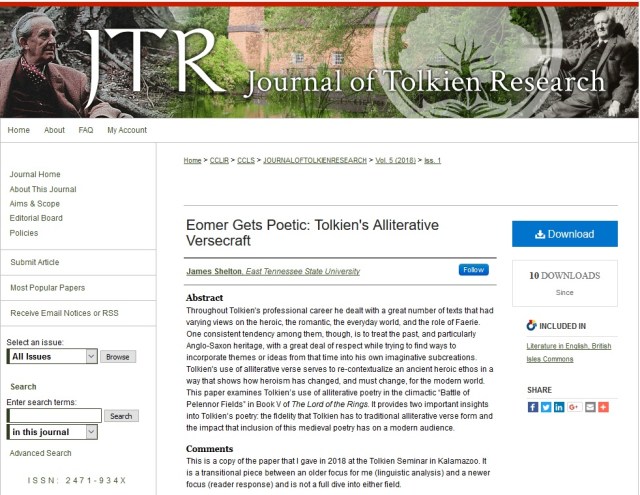
Conference Paper: Eomer Gets Poetic: Tolkien’s Alliterative Versecraft

Two weeks ago, the Open Access Journal of Tolkien Research agreed to publish the paper I presented at the 2018 Tolkien Seminar in Kalamazoo:

Shelton, James (2018) “Eomer Gets Poetic: Tolkien’s Alliterative Versecraft,” Journal of Tolkien Research: Vol. 5 : Iss. 1 , Article 6. Available at: https://scholar.valpo.edu/journaloftolkienresearch/vol5/iss1/6

The paper is a very basic introduction to Alliterative Verse, and Tolkien’s particular dialect in The Lord of the Rings. It then goes into exactly how the use of alliterative verse impacts the reading of the story for a modern audience.

You can view the full paper by clicking the image below:

**Please remember: this is not a peer-reviewed article. It is a conference paper, so it represents ideas in process and not a finalized product.

Olga Polomoshnova’s Experience–Tolkien Experience Project (4)

This is one in a series of posts where the content is provided by a guest who has graciously answered five questions about their experience as a Tolkien reader. I am very humbled that anyone volunteers to spend time in this busy world to answer questions for my blog, and so I give my sincerest thanks to Olga and the other participants for this.

To see the idea behind this project, check out this page

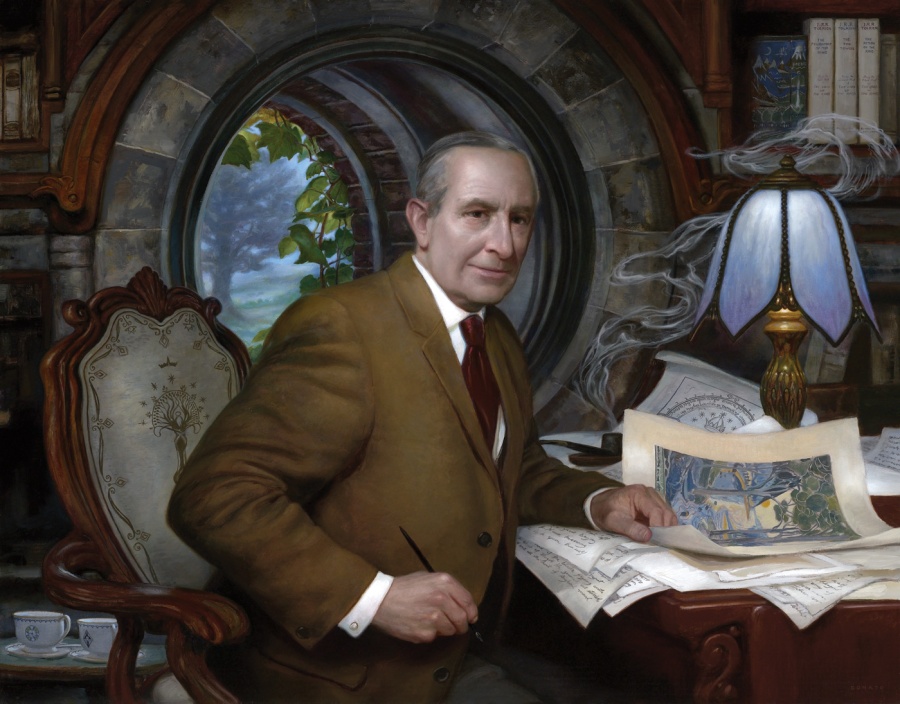
I want to thank Donato Giancola for allowing me to use his stunning portrait of J.R.R Tolkien as the featured image for this project. If you would like to purchase print of this painting, they are available on his website!

If you would like to contribute your own experience, you can do so by using the form on the contact page, or by emailing me directly.

Now, on to Olga Polomoshnova’s responses:


How were you introduced to Tolkien’s work?

Looking back, it now seems that Tolkien’s books found me, rather than I was introduced to them by someone. In my second year at university, studying English philology, I bought three volumes of The Lord of the Rings at a book sale in the main hall. I cannot explain now what made me pick up these books: I was aware of Tolkien’s work, of course, but did not consider reading it at that time. But when I saw these volumes in the box I just took them and that was it.
I did not read the books at that time, though. It was only many years later, long after my graduation from university, when I finally took them from the shelf and was able to enjoy the beautiful language and the story created by the author. However, I do not consider those years as lost (I could have read so much Tolkien so much earlier!) because I am sure his mythology entered my life exactly when it was meant to.

2. What is your favorite part of Tolkien’s work?

I love how many-layered and dimensional Tolkien’s stories are. You can re-read his books every year and still find a lot of things you did not notice before. There is great depth in his works that shows in shorter stories and poems, too. Tolkien’s world feels and appears real due to how greatly detailed, worked out and thought out everything about it is.

3. What is your fondest experience of Tolkien’s work?

Reading The Silmarillion for the first time. It was at the very beginning of January 2013, right after the New Year’s celebration. I had ten days off work and spent them all reading The Silmarillion non-stop while the world outside was quiet and covered with snow. I still remember the feeling of awe, enchantment and excitement on gradually discovering the tales while curling up on the sofa.

4. Has the way you approach Tolkien’s work changed over time?

I think it has, in a way. Now I like looking closely into the tales, legends and verse that Tolkien loved alongside reading and re-reading his own books. Learning more about Anglo-Saxon, Old Norse or Finnish ancient literature helps me understand Tolkien’s work better, adds a new dimension to my appreciation of his stories.

5. Would you ever recommend Tolkien’s work? Why/Why not?

I would recommend it gladly. In my opinion, his work is the finest example of fantasy literature written with great depth, in exquisite language, with love and care that few books can rival.


You can see regular blog posts about Tolkien from Olga on her fantastic blog: http://www.middleearthreflections.com/

LotRFI Pt. 5–Farmer Maggot

I feel like my first impression of Farmer Maggot was typical. At first, I did not like Maggot because I took Frodo’s account as accurate. I believed that he and Maggot had a history of clashing and were at odds with one another. This made Frodo’s reaction to being on his land seem logical.

“One trouble after another!” said Frodo, looking nearly as much alarmed as if Pippin had declared the lane was the slot leading to a dragon’s den. (FR, I, iv, 91)

It was not until Maggot offered food and shelter to the young hobbits that I began to trust him. So far, I think that most readers would agree with this impression, though some of them may have tempered their opinion of Maggot earlier, when Pippin began to push back against Frodo’s characterization.

Interestingly, I was recently listening to a podcast (Corey Olsen’s Exploring The Lord of the Rings, episode seventeen) which highlighted a disagreement that my perspective may have with others. In this podcast, Corey Olsen presents his belief that Maggot’s account of his interaction with the Black Rider is a rather objective recounting. Here is the passage in question:

“Good-day to you!” I says, going out to him. “This lane don’t lead anywhere, and wherever you may be going, your quickest way will be back to the road.” I didn’t like the looks of him; and when Grip came out, he took one sniff and let out a yelp as if he had been stung: he put down his tail and bolted off howling. The black fellow sat quite still.

‘“I come from yonder,” he said, slow and stiff-like, pointing back west, over my fields, if you please. “Have you seen Baggins?” he asked in a queer voice, and bent down towards me. I could not see any face, for his hood fell down so low; and I felt a sort of shiver down my back. But I did not see why he should come writing over my land so bold.” (FR, I, iv, 94)

Olson contends that, because Maggot’s account is objective, the Rider’s use of “yonder” is an attempt for him to blend in to the local dialect to collect information. My interpretation, however, has always been to treat this passage as reported speech. That is, Maggot is conveying the general sense of the interaction using his own idiomatic way of speaking. I never considered, then, that the Rider actually uses “yonder.” Instead, I always thought, and still believe, that Maggot is putting that word into the Rider’s mouth instead of trying to recount the interaction verbatim. This approach to the dialogue seems probable to me because it is a way of retaining the established characterization of both the Black Rider and Maggot. In that the Black Rider is not going to demean himself to try and fit into the dialect of the hobbits, and Maggot has no qualms about paraphrasing other people in his own dialect when it suits him. Also, I think that had Tolkien meant for readers to treat this scene has objective dialogue then he would have embedded the interaction into the text in a different way. As it stands in the published text, however, the entire episode is intended to be reported speech from Maggot’s perspective.

A second manner in which my approach to Maggot was very different from the norm is that he served as a proto-Bombadil encounter to me. My experience of Bombadil was very similar to the pattern that most people adopt with Maggot. It began with distrust but gradually evolved into respect and amiability. I know that this is very different from the opinion of others (as I recounted in my first post), but the pattern established by the Maggot encounter served as a template for many of the meetings that followed it in LOTR.

Where do we Go From Here?

Next we will visit the Barrow Downs, and then on to Bree!

What Do You Think?

How do you approach this passage which recounts dialogue between Maggot and the Black Rider?
Did the Maggot episode serve as a template of encounter for you as a reader?


Old Badger-brock’s Experience–Tolkien Experience Project (3)

This is the third in a series of posts where the content is provided by a guest who has graciously answered five questions about their experience as a Tolkien reader. I am very humbled that anyone volunteers to spend time in this busy world to answer questions for my blog, and so I give my sincerest thanks to Old Badger-brock and the other participants for this.

To see the idea behind this project, or if you are interested in sharing your own, visit the project homepage. If you enjoy this series, please consider helping us fund the project using the support page.

I want to thank Donato Giancola for allowing me to use his artwork for this project. Prints are available on his website!

Now, on to Old Badger-brock’s responses:


How were you introduced to Tolkien’s work?

My mother introduced my brothers and me to The Hobbit and The Lord of the Rings with a set of paperbacks when I was age 11. I recall her reading portions of The Hobbit to us.

What is your favorite part of Tolkien’s work?

I’m not certain how to interpret “part”. Do you mean which work, what particular scene in that work, or what aspect or attribute of Tolkien’s works? I’ll answer the first two.

My favorite work is The Lord of the Rings. It’s a wonderful work from beginning to end, but my very favorite scenes are “The Bridge of Khazad-dûm” (especially Tolkien’s use of the drums to build and diminish tension) and Éowyn’s encounter with the Lord of the Nazgûl in “The Battle of Pelennor Fields” (especially Éowyn’s speech to him). If I had to choose between the two, I’d pick the latter.

What is your fondest experience of Tolkien’s work?

That’s a difficult question to answer. I love all my experiences with his work! Perhaps my fondest experience is reading portions of it aloud to my wife. Although I’ve read his works many times, I find I still get emotional during certain passages. Tolkien’s words are so beautiful, as are the scenes they describe. C.S. Lewis wonderfully described LotR when he stated “here are beauties which pierce like swords or burn like cold iron”. Being able to share Tolkien’s words with the one dearest to me, and to communicate how meaningful they are to me, is particularly gratifying.

Has the way you approach Tolkien’s work changed over time?

Yes and no. (How’s that for an Elven response!) “Yes” because I first read them as a youth, and now that I am in my mid-50s my understanding of both Tolkien’s works and the world we live in has greatly increased. “No” because Tolkien’s words and what they express are timeless. There should be no change in interpretation from when they were published in the ’50s to when I first read them in the ’70s to now in the 2010s. The only change would be the greater understanding now possible due to the publication of The Silmarillion, Unfinished Tales, Letters, HoME, etc.

Would you ever recommend Tolkien’s work? Why/Why not?

An easy question! Yes, of course I would recommend them, and have. Tolkien’s works have great appeal simply as an adventure story, but the more mature reader finds applicability to their lives and the lives of others. His words stir both the emotions and the intellect. I would not recommend LotR and similar works, e.g., The Silmarillion, to younger readers, but The Hobbit was written with children in mind and should be enjoyed by them.


You can see regular comments about Tolkien and other subjects from Old Badger-brock by following his Twitter account: @oldbadgerbrock

LotRFI Pt. 4–The Hobbits as Children

It is still very clear in my mind that I considered the hobbits to be children during my first reading of LotR. In fact, I remember the animosity I initially felt toward the portrayal of the hobbits in the Peter Jackson films because they showed the hobbits as (what I deemed at the time) weak adults, instead of as an inexperienced, sheltered, child-like race. I will readily admit that I probably adopted this viewpoint to better relate to the hobbits as a reader, but it seems to be a very supportable perspective. I want to go into more detail with the character of Pippin in a separate blog post, he has long been my favorite hobbit, but I want to give just a small vignette of each hobbit here that bolster this approach to the hobbits as a group. Now that I am older, I can read into the nuances of characterization much more than I was able to in my first reading. I am not saying that the analysis that follows is the only way or the right way to approach the text, in fact I would explicitly say that some of the analysis is the wrong way to approach the text, but in my first reading I assumed that the hobbits were child-like, and so many aspects that otherwise would contribute to a different understanding of the group only served to validate that perspective in my first reading.

One of the shortcomings in my understanding of LotR as a young reader was that I did not understand the class distinction among the hobbits. I knew that they were on unequal social footing, what with Sam working for Frodo, but I did not really have an appreciation of how this impacted the interactions between the hobbits. Most of the instances where Sam adopts a deferential or submissive attitude which many adults would discern as a marker of his lower-class status, conveyed a much different meaning to me. I saw in these instances the actions of a young boy who was uncertain of the world and his place in it. Therefore, Sam’s appeal to Frodo in his first scene with dialogue, his “Don’t let him hurt me, sir!” (FR, I, ii, 63), struck me as a plea to someone with more understanding of the situation, not as a petition to someone of higher social distinction. This interpretation pairs well with Sam’s expressions of unbridled joy and sense of adventure in a way that makes him seem young and naive. In the same scene, Sam’s ability to change to “Me go and see Elves and all! Hooray!” in just a few lines is very characteristic of the way these two currents of Sam’s personality intersect to make him seem young (FR, I, ii, 64).

In a similar fashion, I interpreted the other hobbits using this same lens. Merry’s “know-it-all” personality came across as a child whose ignorance enabled their over-confidence. Pippin’s joviality struck me as a “cut-up,” someone who was always trying to make others laugh and be the center of attention. The best scene to quickly illuminate both interpretations is the exchange between them in the Prancing Pony just before Frodo, Pippin, and Sam head into the common room. Merry warns the others to “mind your Ps and Qs, and don’t forget that you are supposed to be escaping in secret, and are still on the high-road and not very far from the Shire” (FR, I, ix, 154). To which Pippin responds “Mind yourself! Don’t get lost, and don’t forget that it is safer indoors” (FR, I, ix, 154). Merry’s warning comes from a place of superiority. He feels like he knows more than the other hobbits, and it is his burden to keep them in-line, even though he has never been much farther than they have and has only heard tales of Bree. Pippin’s response starts with a rebuttal. He starts indicating that Merry should be as wary as they are, and goes on to give his own warnings. Pippin’s warnings are a mockery of Merry’s in that they expose the unnecessary statements of common sense for what they are. This shows Merry’s high self-regard and Pippin’s playful way of bringing him back down to hobbit stature.

The final scene I want to talk about is the interaction in “Three is Company” where Pippin orders Sam to prepare breakfast for the others after their first night camping in the Shire. The following exchange takes place:

[Frodo] stretched. “Wake up, hobbits!” he cried. “It’s a beautiful morning.”

“What’s beautiful about it?” said Pippin, peering over the edge of his blanket with one eye. “Sam! Get breakfast ready for half-past nine! Have you got the bath-water hot?”

Sam jumped up, looking rather bleary. “No, sir, I haven’t, sir!” he said.

Frodo stripped the blankets from Pippin and rolled him over, and then walked off to the edge of the wood. (FR, I, iii, 72)

I choose this scene for a couple of reasons. Again, remember that I was unaware of the class distinction as a young reader. This scene, then, demonstrated the kind of hierarchy of joking that can persist within a friend-group. Pippin’s entitlement leads him to order Sam around and Sam, as the stereotypical member of the group who is seeking belonging, is quick to accommodate the demand. In a sense, I considered this a joke from Pippin that he took too far. This crossing of a line is what compels Frodo to stick up for their mutual friend and check Pippin, much like Pippin does to Merry in the Prancing Pony scene discussed above. It would not have surprised me, in my initial read, if Pippin directed this command at Frodo; though I would have expected Frodo to stand up for himself had that been the case.

The only exception to this form of stereotyping was Frodo. Frodo was a very difficult character for me to understand as a young first-time reader. He was very complex, too complex for me to really grasp much of until I read the book a second time as a teenager. While he was on the same level with the other hobbits, meaning they treated him as an equal, he was altogether more grave and serious than the rest of them. I almost want to say that I approached Frodo as the “straight man” of the group. He was the one who understood the larger situations so he endured the colorful expressions of delight and humor without engaging in them himself very often. I was much more engrossed by Frodo’s character later in the book, but I did not particularly like him this early on—even though I probably identified more with him on a personal level than any of the other hobbits. His reserved demeanor and aloof personality among the inhabitants of the Shire were very relatable for an introverted middle-schooler.

Where do We Go From Here?

I hope to stop by Farmer Maggot’s pretty soon, then explore the Barrow Downs!

What Do You Think?

Did you equate the hobbits with a specific age when you read LotR? If so, what age were they?
How has your mental-image of the hobbits changed over your experience rereading/discussing LotR?
Kalamazoo Report (2018)

I have recently returned from the 54th International Congress on Medieval Studies, where I attended several wonderful paper presentations and had the opportunity to network and promote my PhD Research!

Highlights:

There were so many great papers and resources shared that I do not have enough time or space to recount them all, so here are a few that are easier to share quickly:

Tolkien fellowship at dinner

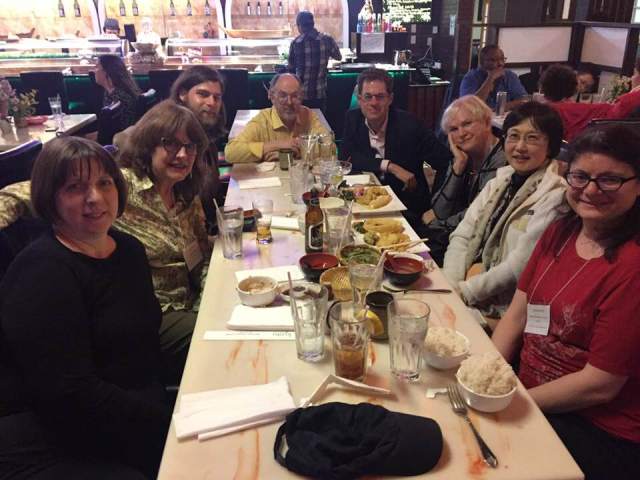
I was fortunate enough to have great company each evening at dinner. Here is a picture of one such gathering:

32253652_10156503589572386_8384827101634625536_n
Pictured (left to right): Kris Swank, Diedre Dawson, me, John Rateliff, Andrew Higgins, Jane Chance, Yoko Hemmi, and my PhD chair Dimitra Fimi. Photo taken by Douglas Anderson.

Tolkien Art Index

Erik Mueller-Harder shared this phenomenal resource that he has been working diligently to compile. It is a standardized list of Tolkien’s images. The usefulness and descriptiveness of the index makes it practical and influential. It should become the standard reference for Tolkien’s images.

Find the index here: http://tai.vermontsoftworks.com/

Tales After Tolkien Society

I was elected a Vice-President of the society, an honor that I hope to live up to!

Many Meeting

I had several meaningful interactions and can’t wait to get to work on some of the ideas I brought home from the conference! The encouragement and insight of scholars whose work I admire is truly one of the greatest assets of a conference like this. I hope everyone made it home safe!


Rhiuial’s Experience–Tolkien Experience Project (2)

This is one in a series of posts where the content is provided by a guest who has graciously answered five questions about their experience as a Tolkien fan.

To see the idea behind this project, or if you are interested in sharing your own, visit the project homepage. If you enjoy this series, please consider helping us fund the project using the support page.

I want to thank Donato Giancola for allowing me to use his artwork for this project. Prints are available on his website!

Now, on to Rhiuial’s responses:


How were you introduced to Tolkien’s work?

Picked up Unfinished Tales in a bookshop aged 18 and got thoroughly hooked!

What is your favorite part of Tolkien’s work?

The Silmarillion, but especially: Of The Fifth Battle: Nirnaeth Aernoediad.

What is your fondest experience of Tolkien’s work?

Too many !

Has the way you approach Tolkien’s work changed over time?

Yes. I now much prefer reading the books chronologically.

Would you ever recommend Tolkien’s work? Why/Why not?

I have done frequently, why not?? A great way of developing imagination/escapism


LotRFI Pt. 3–Shire Trees and Old Man Willow

Landscape

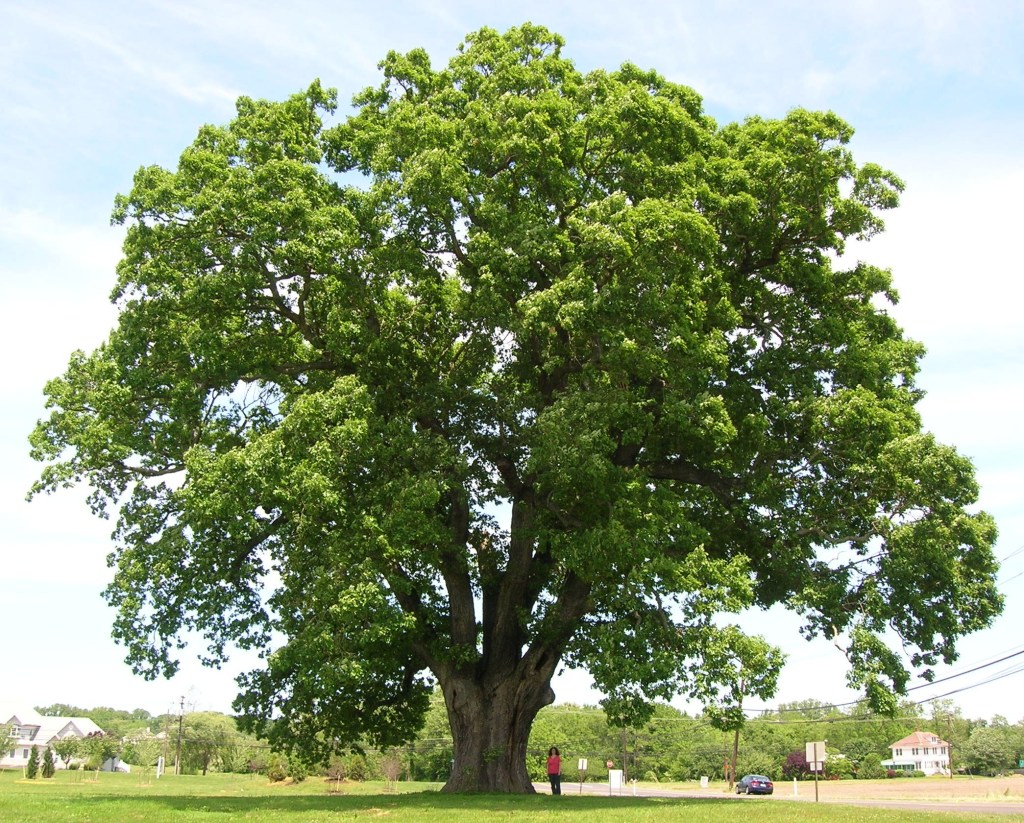
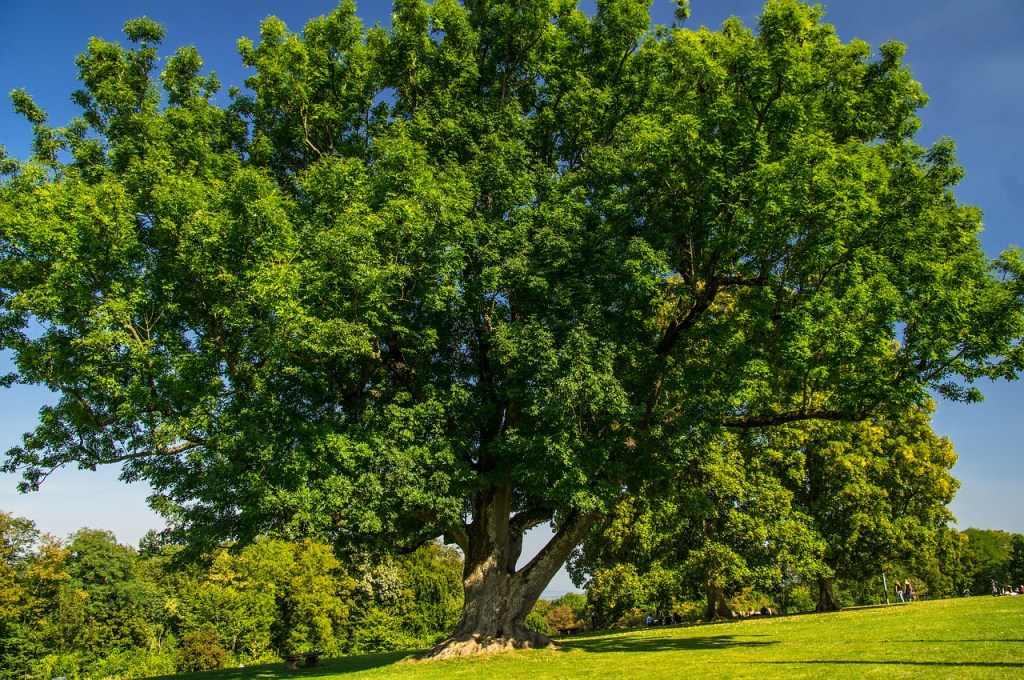
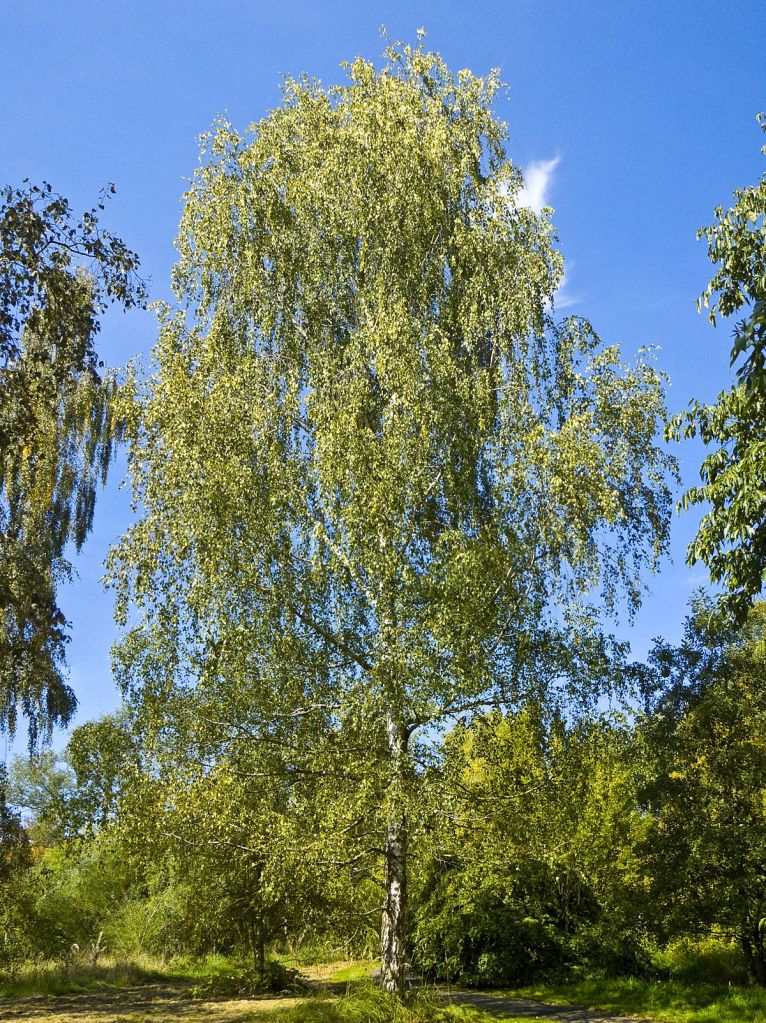
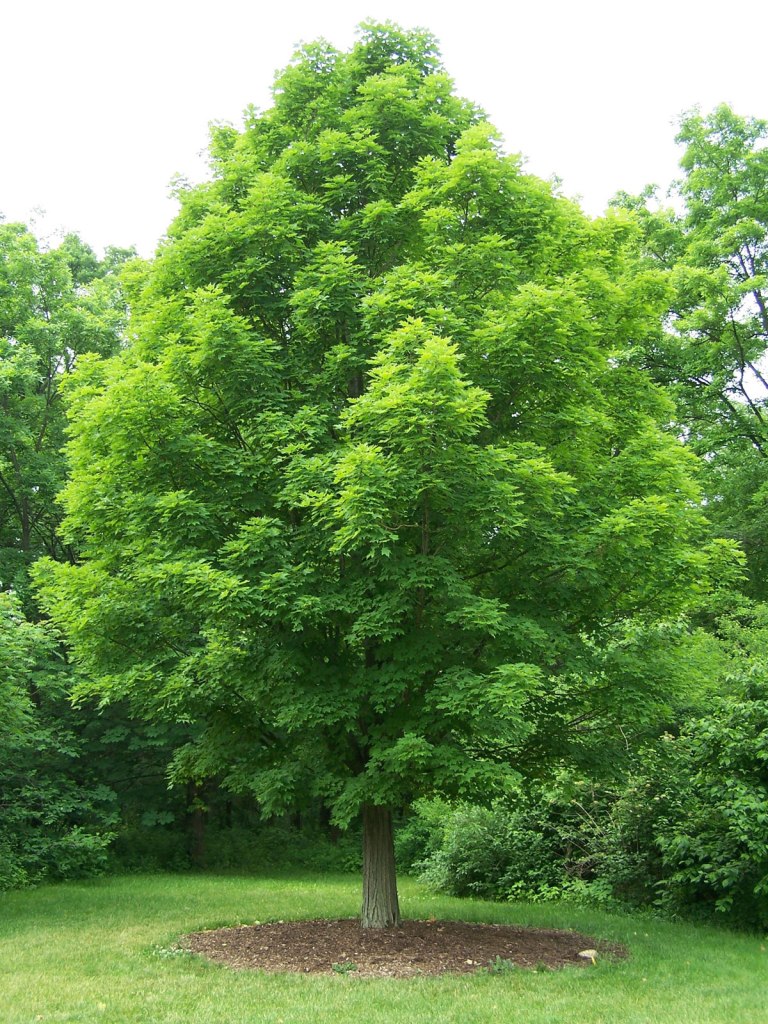
Since I read the books as a child, I had no real concept of what different kinds of trees looked like. Growing up in Southern United States, the most common trees around me were birch, maple, oak, and ash. Tolkien only uses two of these species in his descriptions (oak and ash), but I undoubtedly pictured The Shire with the same trees that I encountered every day.

Tolkien Included:

Oak Trees

Ash Trees

I added:

Birch Trees

Maple Trees

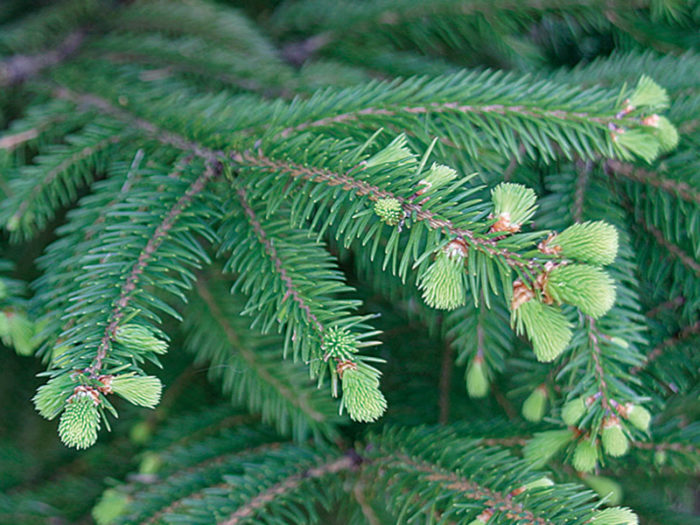
At first, this may seem like a trivial matter, but it can have a very large impact on the visual landscape in the reader’s mind. For example, in Chapter three, the travelers (Frodo, Sam, and Pippin) stop in a “fir-wood” and make camp for the night:

“Just over the top of the hill they cam on the patch of fir-wood. Leaving the road they went into the deep resin-scented darkness of the trees, and gathered dead sticks and cones to make a fire” (FR, I, iii, 72).

Tolkien describes the hobbits setting up camp under a group of trees similar to this:

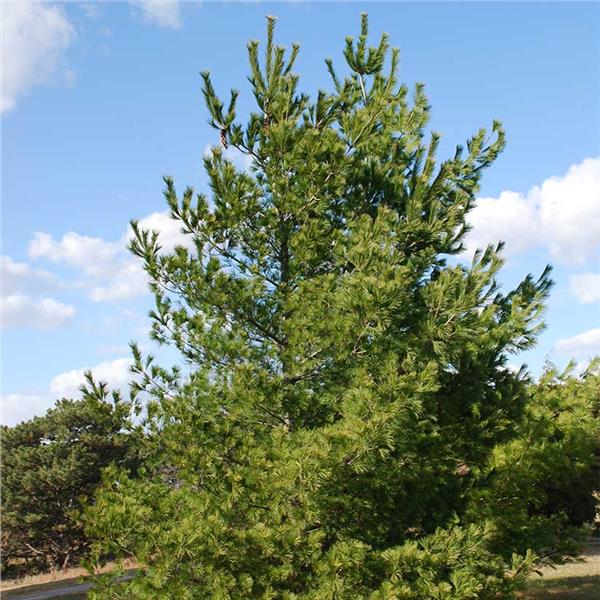
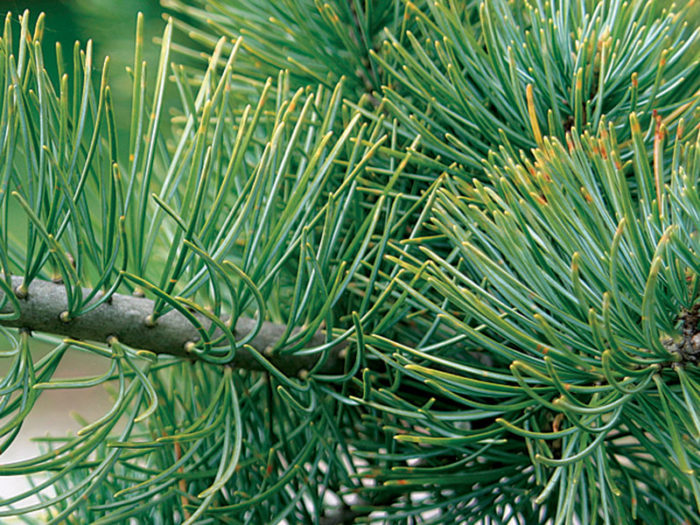
However, I had never seen fir trees. Using the context clues, I assumed that it had to be a kind of tree that had “cones.” Well, I was certainly familiar with one of those, we had dozens of pine trees in my back yard! So I pictured the three hobbits sitting in a group of trees that looked something like this:

Now I know that many readers are saying, “They are all evergreen conifer trees, this really isn’t a big deal!” But I would ask you to look closer. Here is a close comparison of branches from each (images from http://www.finegardening.com/fir-vs-spruce-vs-pine-how-tell-them-apart):

Fir Needles

Pine Needles

This view shows you the very different appearance of each tree. Also, if you grew up with pine trees (or used one for your Christmas/Yule celebration) then you know that they have two very unique characteristics: they shed their needles and their sap is very sticky and odoriferous. This means that in order to start a fire under the pine trees, the hobbits would likely have had to clear a space among the fallen, dead needles of a pine so as not to start a larger fire than they intended! So while this distinction of trees is very small, it makes a very large difference in the impression it leaves on the reader.

In the end, The Shire that I pictured as a child had a few more birch and maple trees than Tolkien probably envisioned, and all of the fir trees were replaced with pine. This leads to a very different mental image and also changes the associations that the reader has with the trees. These differences of experience lead to different individual interpretations and responses to the text.

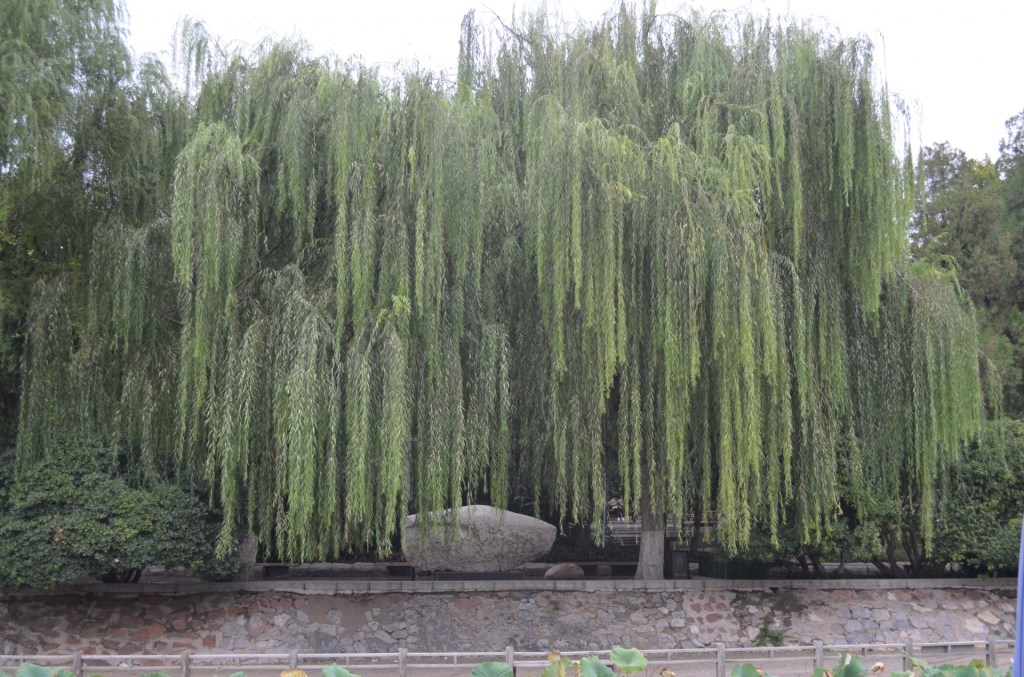
Old Man Willow

This actually explains why many of the artists who have portrayed Old Man Willow have made the dangling limbs shorter than I always imagined them. I had always thought that it was largely artistic license, since a curtain of dangling limbs is less appealing than a clear view of the action,. Perhaps this latter consideration still plays a role, but the fact that the types of willow in England ​and that many of them have characteristically shorter limbs than a Black Willow certainly reaffirms their decision.

Where Do We Go From Here?

I intend to have the first reflection on the character of a hobbit soon. I also want to look at the events with Farmer Maggot and the Barrow Downs before we head on to Bree.

What Do You Think?

What trees have you always pictured in the Shire?
Do you think that the kind of trees you imagine change the way you think about the setting?
How have you always pictured Old Man Willow?

Tom H’s Experience–Tolkien Experience Project (1)

This is the first in a series of posts where the content is provided by a guest who has graciously answered five questions about their experience as a Tolkien reader. I am very humbled that anyone volunteers to spend time in this busy world to answer questions for my blog, and so I give my sincerest thanks to Tom and the other participants for this.

To see the idea behind this project, or if you are interested in sharing your own, visit the project homepage. If you enjoy this series, please consider helping us fund the project using the support page.

I want to thank Donato Giancola for allowing me to use his artwork for this project. Prints are available on his website!

Now, on to Tom H’s responses:


How were you introduced to Tolkien’s work?

As a boy I was enchanted by anything to do with the ancient world or mythology. At about 10 I came across Conan the Barbarian, first in some mass market reprints, and then in Marvel Comics. In those days comic books had letters to the editor. People would write in and Stan Lee would respond. A famous example of this is the letter a teenage G.R.R. Martin wrote in about the Fantastic Four, which was published and I’ve seen it, I think, on his website.

The summer I was eleven (1971) I read a letter someone had sent in about a previous issue of Conan, saying that the battle scene in it was the best thing he had read since “The Siege of Gondor” in The Lord of the Rings.  This sounded too good to resist, and I found the three books on a spinner rack at a local newspaper store. I bought Fellowship and burned through it. I did the same with The Two Towers, and literally ran out the door to get The Return of the King after reading “Frodo was alive, but taken by the enemy.” As soon as I finished, I read it again.  For about ten or twelve years after this I read it 2-3 times a year.

I read The Hobbit, too, but only a couple of times. After The Lord of the Rings it just didn’t seem very substantial, though I liked many of the characters. (I have a much higher opinion of The Hobbit these days.) I had probably read The Lord of the Rings fifteen times by the time The Silmarillion appeared in 1977. Unlike many first time readers of The Silmarillion, I had no difficulty with it. I devoured it. There wasn’t anything like the amount of stuff on Tolkien in those days, but I read everything I could get my hands on. I still have these books 40 years later.

What is your favorite part of Tolkien’s work?

A very tough choice, given that I’ve been reading it for over 40 years. Different parts have been my favorites at different ages. When I was a boy, the horns of the Rohirrim were my favorite, and they are still hard to beat.  The courage and love of Merry and Eowyn fighting through their fear, to face the Witch-king. Strider singing of Beren and Luthien. Finrod and Sauron’s duel of song. Luthien’s demolition of Sauron. The leap of Beren. The description of Sam standing by the side of the sea on the Grey Havens far into the night.  Tuor being granted the ability to see with ‘the swift sight of the Valar’ for a moment. The paragraph in Akallabeth describing the wave overwhelming everything, last of all the Queen.

What is your fondest experience of Tolkien’s work?

Taking an hour and a half bus ride across town to buy The Silmarillion the day it came out, and starting to read it on the ride back. I don’t remember if I finished it that first night, but I don’t think I slept a bit. I am pretty sure I read all night long. All of this culminating in the moment when I finally got to learn more about Beren and Luthien. Until that moment, Strider’s song was pretty much all you could know.

Has the way you approach Tolkien’s work changed over time?

I am not entirely certain I know what you mean by “approach.” Nowadays I am more attuned to seeing how Tolkien does things than I was when I first read the text, and I do a lot of browsing in keeping with this. It’s also true that when I used to read it as a boy and as a teenager, I lived in the story, but now the story lives in me. The story, especially The Lord of the Rings, is like a friend I love spending time with. We know each other well.

Would you ever recommend Tolkien’s work? Why/Why not?

Of course. At its simplest it’s a wonderful tale, but it’s also an amazingly rich world that helps to recover my soul from the “real” world, and thus it allows me to face the world better.


You can see regular blog posts about Tolkien from Tom on his fantastic blog: http://alasnotme.blogspot.com/