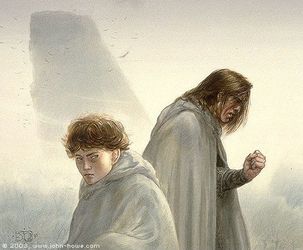
Baymoot Approaches

As many of you already know, I have been responsible for organizing Baymoot for Signum University this year.

The event takes place at Mills College in Oakland, California on Saturday, August 18, 2018. The theme is “breaking boundaries and crossing borders.” It is a one-day literature symposium. It is $40 to attend, and a light breakfast and lunch are provided.

I am very excited about the schedule we have been able to pull together, including our plenary speaker: Corey Olsen, a.k.a The Tolkien Professor!

The Baymoot organizational team has already been an invaluable help in making sure the event runs smoothly!

I just wanted to post here that there is only one week left to register for the event, where you can meet me and the other excellent speakers and share your ideas with other Tolkien and speculative fiction fans!

For more information about the event, and to register, see the Signum page for the event!

LotRFI Pt.15–Caradhras Changes Everything

I have always had inordinately strong opinions about the passage about Caradhras. In fact, it was changes made to this episode that made me shout “no!” when I went to see Peter Jackson’s Fellowship of the Rings in theaters.

I was familiar with other literature that gave a sense of autonomy to nature before I read LotR, and I was excited to see that Tolkien does the same throughout the text, even before getting to the fully autonomous Treebeard. As a child, I loved the idea that trees could have volition and emotions. Tolkien takes this wondrous idea and pushes it one step further in the Caradhras episode. As the snows on Caradhras foil the attempt of the Fellowship to pass over the mountain, this exchange occurs:

‘We cannot go further tonight,’ said Boromir. ‘Let those call it the wind who will; there are fell voices on the air; and these stones are aimed at us.’

‘I do call it the wind,’ said Aragorn. ‘But that does not make what you say untrue. There are many evil and unfriendly things in the world that have little love for those that go on two legs, and yet are not in league with Sauron, but have purposes of their own. Some have been in this world longer than he.’

‘Caradhras was called the Cruel, and had an ill name,’ said Gimli, ‘long years ago, when the rumor of Sauron had not been heard in these lands.’ (FOTR, II, iii, 289)

Here Boromir tries to attribute the malevolent weather to Sauron or one of his agent; however, but Aragorn and Gimli are quick to halt this impulse and clarify that there are other forces at play in the world. Gimli goes so far as to specify that the will is probably that of Caradhras himself.

tn-company-attempts-the-pass-of-caradhras
Image copyright Ted Nasmith

I cannot emphasize this enough: this passage changed my worldview the first time I read it. To ascribe volition to not just plants, but to all of nature, to the very earth itself! This was a truly awe-inspiring thought for me. I remember walking around for days thinking about the ramifications of this idea. What does it mean to till an earth that could feel the cuts? What does it mean to dynamite a mountain that can fight back? To this day, I occasionally ponder this “what if” question when I consider my lifestyle.

Let me be clear, I did not instantly change and become an eco-warrior or any of the other clichés, but this passage made me think about how I affected the soil, the rock, and the foundations of our planet for the very first time. I had already learned about trees and had Arbor Day plantings and such, but this was so much more inclusive than those lessons. If you can impact the ground, then make an influence on the world in every second of every day.

Imagine watching Peter Jackson’s movie after that. Jackson ascribes the wind to Saruman! Doing so completely changes Tolkien’s entire conception. It flattens all of nature, except Ents/Huorns, to mere things with no will or agency. This was by far the biggest disappointment for me leaving the theater.

J.S. Klingman’s Experience–Tolkien Experience Project (13)

This is one in a series of posts where the content is provided by a guest who has graciously answered five questions about their experience as a Tolkien reader. I am very humbled that anyone volunteers to spend time in this busy world to answer questions for my blog, and so I give my sincerest thanks to J.S. and the other participants for this.

To see the idea behind this project, check out this page

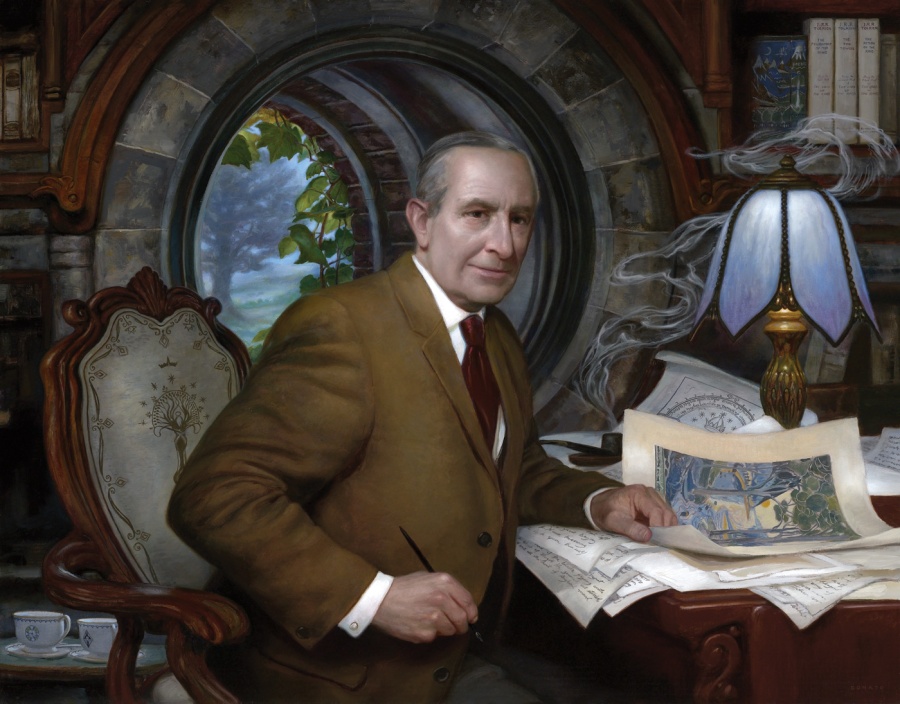
I want to thank Donato Giancola for allowing me to use his stunning portrait of J.R.R Tolkien as the featured image for this project. If you would like to purchase print of this painting, they are available on his website!

If you would like to contribute your own experience, you can do so by using the form on the contact page, or by emailing me directly.

Now, on to J.S. Klingman’s responses:


How were you introduced to Tolkien’s work?

My older brothers were gigantic Tolkien fans; they infected me with Tolkienism at a young age, although I became more of a fanatic in 2018.

What is your favorite part of Tolkien’s work?

Well, I really love the motion pictures’ depiction of the books. But, that’s more Peter Jackson’s work… I really enjoyed The Silmarillion and The Hobbit – the former was an amazing epic account of the times preceding The Lord of the Rings, while the latter was the lighthearted story of a hobbit’s quest. Both struck me as intriguing tales despite the fact that they are written somewhat differently. I found them boring at first, but now I love them. I just need to get used to some things, I suppose…

What is your fondest experience of Tolkien’s work?

Probably reading The Hobbit all the way through for the first time?

Has the way you approach Tolkien’s work changed over time?

Yes. I love it now more than ever, and someday want to make a huge personal library of Tolkien’s work. Before, I thought that it was great and all, just not something to get fanaticized over.

Would you ever recommend Tolkien’s work? Why/Why not?

Definitely, one hundred percent!! Tolkien’s work has been the most inspiring fiction I have ever read/watched!! Middle-Earth is so complex, the characters were all likeable (except for those evil ones), and the motion pictures were AMAZING!! Plus, Tolkien’s and Peter Jackson’s works have a wonderful, hopeful, and truthful worldview that makes them compelling and interesting to read/watch.


To see more of J.S. Klingman’s thoughts on Tolkien, head over to his blog: https://mylittleholeintheground.site123.me/

Tolkien CFPs for Kalamazoo 2019

The CFP for the 54th International Congress of Medieval Studies at Kalamazoo has been published, so it is high time that I post about all eight (yes, you read that right, eight!) of the Tolkien sessions planned for the upcoming event!

I will start with the panels from the Tales After Tolkien Society (they get premier billing here because I am the VP!)

Tales After Tolkien Society Panels

The first session, a paper session titled The Legacy of Tolkien’s Medievalism in Contemporary Works, will examine the continuing italestitnfluence of J.R.R. Tolkien on conceptions of the Middle Ages and medieval prevalent in academic and popular cultures. As has been amply attested, Tolkien’s medievalist work in his Middle-earth corpus has exerted an outsized influence on subsequent fantasy and medievalist popular culture, and, following Paul B. Sturtevant’s assertions in The Middle Ages in Popular Imagination, it is largely or chiefly through popular cultural engagement with the materials that people—both the general public and those who become the students and scholars of the medieval—develop their early understandings of the Middle Ages. Decades on, Tolkien’s influence on popular culture—books, yes, but also movies, tabletop games, video games, television series, music, and other elements of popular understanding—continues to be felt, and continued examination of that influence is therefore warranted.

The second session, a paper session titled Afterlives of Medieval Religion in Contemporary Works, will look at how the post-Tolkien works that are the Society’s focus appropriate and misappropriate medieval religious constructions. That formal religion was a central element of the European medieval, broadly conceived, is a conventional wisdom that is reflected both in the typical programming of the Congress and in the pages of Speculum, among others—yet many medievalist works, particularly those in mainstream popular culture, neglect or shy away from overt religiosity, or else they invoke it partially and only to specific effects, and in ways that do not appear to align well to the functions of the medieval church. Untangling the uses, misues, and avoidances of a key element of medieval culture in works that purport to be medieval or medievalist in their intent bears examination, and papers in the proposed session would be directed to those ends.

(The panel descriptions I am posting here were previously posted on the society blog)

To submit to either of these panels, contact the President of the society, Geoffrey B. Elliott here.

The Tolkien at Kalamazoo group is sponsoring three panels.

  1. Tolkien and medieval constructions of race. Paper session.
  2. Tolkien and temporality: medieval constructions of time. Paper session.
  3. Misappropriation of Tolkien’s medievalism. Roundtable.

To submit to any of these panels, contact either Chris Vaccaro here or Yvette Kisor here

There are also a few individually sponsored Tolkien sessions planned:

The Medieval Roots of Tolkien’s The Fall of Gondolin, organized by Bill Fliss.

The upcoming publication of Tolkien’s The Fall of Gondolin (August 2018) makes available what Tolkien called “the first real story of this imagined world” (Letter 163), the story of the fall of a great hidden Elven kingdom that occupied Tolkien throughout his life. It forms the basis for much of his early legendarium of Middle-earth and incorporates many aspects of medieval themes and topics. This paper session invites considerations of the medieval roots of Tolkien’s tale.

(The preceding description was originally shared by Bill Fliss)

You can contact him about the session here.

Tolkien’s Legendarium and Medieval Cosmology, organized by Judy Ann Ford

You can contact her about the session here.

Medieval Song, Verse and Versification in Tolkien’s Works, organized by Annie Brust

You can contact her about the session here.

LotRFI Pt.14–Wargs

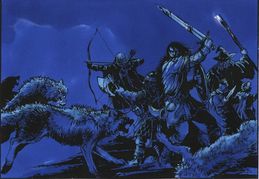
The beginning of the next episode which features wild animals is remarkably contrary to the crebain incident. Without warning, Aragorn names the enemy: “Aragorn leapt to his feet. ‘How the wind howls! He cried. ‘It is howling with wolf-voices. The Wargs have come west of the Mountains!’” (FR, II, iv, 297) The story then becomes a rapid exchange of dialogue as the Fellowship makes decisions and outlines plans for their journey. Then there is a lull in the activity as the Fellowship makes camp and sets a watch against the wolves. Then, the fight begins as Wargs encircle the camp and the Fellowship is forced to fend them off.

dances-with-wolves
Image copyright Katarzyna Chmiel-Gugulska

This encounter always reminded me of the fight where Strider, Frodo, and the other hobbits struggled against the Ringwraiths near Weathertop. In each case the protagonists are encircled by enemies near a campfire and must use fire itself to drive away the enemy. It is probably this desired parallel that makes Gandalf’s role so significant to me. Unlike the somewhat successful attack by the Ringwraiths earlier, Gandalf, with some assistance from Legolas, drives away the Wargs before they can hurt anyone. Gandalf puts forth some of his power, seeming to grow in stature and power, as he grabs a branch and with it causes “fire to leap from tree-top to tree-top” until “the whole hill was crowned with dazzling light” (FR, II, iv, 299). At this sight, and the death of their leader, the Wargs flee. Gandalf’s might and skill saves the group and keeps the wolves at bay until they can reach Moria. While the crebain serve to deepen the ominous atmosphere in Hollin, the Fellowship confronts the wolves and staves them off. While there is still fear of their return, there is every indication that this is a manageable threat.


As a note of full disclosure: I read The Call of the Wild by Jack London a few years before LotR. It quickly became one of my favorite books when I was around ten years old. I enjoyed the escapism I found in the Alaskan wild and the grittiness of the writing; however, I mostly enjoyed the book because I loved Buck, the canine protagonist who relates the story. I undoubtedly channeled some of the horrific images from that book into the threat presented by the Wargs here.


Where do We Go From Here?

I want to take a step back, chronologically, and take some time to ruminate on Caradhras. This was a particularly important insight for me, and I hope I can do it justice!

What Do You Think?

I have depicted my first interpretation of the Crebain the Warg encounters as very different in nature. Do you agree with this perspective? Do I miss some important similarities?

Jeremiah B’s Experience–Tolkien Experience Project (12)

This is one in a series of posts where the content is provided by a guest who has graciously answered five questions about their experience as a Tolkien reader. I am very humbled that anyone volunteers to spend time in this busy world to answer questions for my blog, and so I give my sincerest thanks to Jeremiah and the other participants for this.

To see the idea behind this project, check out this page

I want to thank Donato Giancola for allowing me to use his stunning portrait of J.R.R Tolkien as the featured image for this project. If you would like to purchase print of this painting, they are available on his website!

If you would like to contribute your own experience, you can do so by using the form on the contact page, or by emailing me directly.

Now, on to Jeremiah B’s responses:


How were you introduced to Tolkien’s work?

My dad introduced me to Tolkien by sitting me down at about the age of 4 to watch the Rankin-Bass animated version of The Hobbit, and I’ve gone ever-deeper into the legendarium from there. But I often return to that animated classic, and I’ll always defend it as being brilliantly executed from those who like to call it silly or weird. While it is never flawless, it manages to capture in 1hr18m what the big-budget Hollywood adaptation managed to miss almost entirely in the course of nine hours.

What is your favorite part of Tolkien’s work?

This depends on what you mean by ‘part’. My favourite book remains The Lord of the Rings. But my favourite “quality” or “thing” about Tolkien and his work is how rich, deep, and real it feels. When I read it, it “feels” like it could all really have happened. Tolkien achieves this quality through many mechanisms which aren’t appropriate for this short-reply format. But I’ve not felt that quality with my (admittedly limited) experiences with other fantasy novels.

What is your fondest experience of Tolkien’s work?

I often wish I could ‘forget’ Tolkien and ‘re-discover’ him for the first time. The closest I can get is reading to my daughter (who is 10 as of writing this) and watching her reactions. It is wonderful. I’m letting her dictate the speed of her introduction because I hope it will make her more naturally take to the material. I don’t want it forced. But so far we’ve managed to go through The Hobbit (twice), Smith of Wootton Major, Farmer Giles of Ham, and Roverandom, and we’ve recently begun The Fellowship of the Ring.

However, equally important to me is my wife, who I met through an online book forum discussing Tolkien. This was back in 2004 when meeting people from the Internet was much more taboo than it even is now. It’s safe to say that without Tolkien, my life would be completely different: I wouldn’t be married to this woman, I wouldn’t have my daughter, and I wouldn’t have moved 3500 miles from my hometown across the Atlantic.

Has the way you approach Tolkien’s work changed over time?

Yes! Like many, I used to skip the poetry. And I didn’t really start to go in for “Tolkien studies” until I was in my 20s. Instead, I merely read cover-to-cover (skipping the appendices), and moved on. Now I read more carefully and I often read for different reasons (studying a particular concept, and of course, for pleasure). I’ve broadened my Tolkien bookshelf and “to be read” pile significantly, which now includes essays, papers, and books by many other authors who have, in turn, offered a unique perspective on Tolkien.

Would you ever recommend Tolkien’s work? Why/Why not?

I would (and have several times) recommend Tolkien to anyone who likes mythology/ high fantasy/ romance novels and isn’t afraid of large sections of the narrative being devoted to the description of a landscape or local flora. But I accept that Tolkien is not for everyone!


To see more of Jeremiah B’s thoughts on Tolkien, head over to his fantastic blog: https://mathomhouse.wordpress.com/

LotRFI Pt.13–Crebain

After leaving Rivendell, the narrative makes many asides into the description of geography and scenery, and there is much interaction among the Fellowship which helps to establish each character as well as their roles within the group; however, there are two major encounters with groups of wild animals that I want to look at in a bit more detail: the crebain and the wolves.

daniel-govar-crebain
Image copyright Daniel Govar

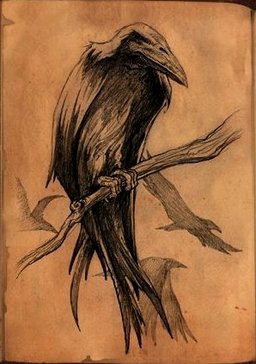
The Fellowship encounters the crebain in the land of Hollin, little more than a fortnight out from Rivendell. Unlike the movie interpretation of these events, the significance of the crebain is not in their appearance, but in the silence which their approach instills in the land. Aragorn observes how “No folk dwell here now, but many other creatures live here at times…Yet now all things are silent. I can feel it” (FotR, II, iii, 284). This passage is so ominous that I underlined it several times. As a reader, I was very afraid of anything that could cause an entire region to change its character! I imagined some sort of invisible blight that had somehow scared all of the animals of the area, but left the land untouched. What kind of monstrosity would be capable of such a thing?

It is because of this anticipatory passage that the appearance of the crebain is so impactful: What starts as a shadow in the distance takes on an ominous import as the source of such devastation and fear. This led to an interesting fluctuation of emotions for me. At first the cloud terrified me. Then, as I discovered, along with Sam, that it was simply a large flock of birds, I felt a sense of relief. Aragorn’s reaction to the birds, and his subsequent explanation of their significance renewed my sense of looming fear. The trick that Tolkien pulls here he does several times (including earlier with the black riders), and I do not know that I had ever before experienced this unique skill by any other author. He started with a kind of anxiety about the unknown cause of the stillness in Hollin, and somehow Tolkien identifies the immediate cause of the anxiety for the reader, but still leaves an ominous foreboding and completely unanswered questions. In my previous readings, whenever the source of the anxiousness was identified, there was something to be done. The enemy could be faced, fled, or reasoned with. The enemy became a known quantity. In this instance, the reader understands that the crebain are simply an implement. Whether they spotted the Fellowship or not is left uncertain, as is their ultimate master, although there are some pointed speculations. Furthermore, simply because they are under a malevolent influence does not entirely answer the question of why all of Hollin has gone quiet. What do the beasts and other birds have to fear from the master of the crebain?

While it was such a small occurrence when compared to the quest of the Ring, this episode really had an effect on my reading as a child. Largely because a part of the natural world is here used as an implement of evil, the event underscored my cautiousness and unwillingness to trust in characters with an unknown past (including Boromir).

Julie Valdez’s Experience–Tolkien Experience Project (11)

This is one in a series of posts where the content is provided by a guest who has graciously answered five questions about their experience as a Tolkien reader. I am very humbled that anyone volunteers to spend time in this busy world to answer questions for my blog, and so I give my sincerest thanks to Julie and the other participants for this.

To see the idea behind this project, check out this page

I want to thank Donato Giancola for allowing me to use his stunning portrait of J.R.R Tolkien as the featured image for this project. If you would like to purchase print of this painting, they are available on his website!

If you would like to contribute your own experience, you can do so by using the form on the contact page, or by emailing me directly.

Now, on to Julie Valdez’s responses:


How were you introduced to Tolkien’s work?

I first heard of J.R.R. Tolkien when I was about ten. A classroom that I was in for the after school program was reading The Hobbit, and I used to stare at the cover wondering how the author’s last name was pronounced. I read a Tolkien work for the first time the following year because my teacher had a copy of The Two Towers lying around. Unfortunately, I only read three pages before I gave up, as I had no idea who the characters were or what in the world an orc was. Fortunately, three years later, I read the entire series for the first time.

What is your favorite part of Tolkien’s work?

To me, the best part of Tolkien’s work is how very inspiring his writing is. The small have the strongest will. Men are frail, but resilient. The love of friends can help you conquer. Hope is a light in the darkness. Tolkien gave me hope in a time where I had none, and so the inspiration his writing blessed me with has been the best part for me.

What is your fondest experience of Tolkien’s work?

My fondest experience of Tolkien’s work was reading The Hobbit with my little sister. I was thirteen and she was eight at the time, and so in a way, I felt like I was passing something on to her, this love for Middle-earth and admiration for this author. We had so much fun reading that together, and when her class read The Hobbit the following year, she knew even more about the book than the teacher did! In a way, this love that we share for Middle-earth is a special connection, because we don’t know many Tolkien fans our age, so Middle-earth became our special little niche. We had each other to share it with, and it all began with the day she asked me to read her The Hobbit.

Has the way you approach Tolkien’s work changed over time?

My approach has changed only a bit. I’ve become so familiar with several of Tolkien’s works that my time rereading has become more of re-analyzation and searching for things that I missed since the last time I read.

Would you ever recommend Tolkien’s work? Why/Why not?

I recommend Tolkien to everyone. First of all, I am an avid advocate for the classics, and I think that everyone should read The Hobbit and The Lord of the Rings before they go to college. Second, Tolkien has a very unique approach to fantasy where he borrows from several different mythologies that is very enriching to readers. Third, Tolkien writes unlike any author that I have ever read before. He dedicated his life to fantasy, and his works have a profound resonance that you rarely see anymore as a result. Fourth, whether or not you are a huge fan of the fantasy genre, you can always find something from Tolkien that will suit your fancy. For the fantasy reader, there’s his Middle-earth saga. For those who prefer non-fiction, he has written several engaging essays. For the poetic soul, there are enough songs and poems of several themes to make an anthology. For the little ones, there’s The Hobbit and other light-hearted works like Letters from Father Christmas and Farmer Giles of Ham. Sixth, Tolkien wrote from the human soul, and as a result, his works are felt in the soul. His characters are so complex and human-like that you will most certainly find a plight or characteristic that strikes a chord with you. I just feel that J.R.R. Tolkien was a gift to the world, and that the gifts he left behind ought to be shared, especially in a time where the fantasy genre and writing in general is taking a somewhat unsavory turn.


LotRFI Pt.12–Boromir the Bad

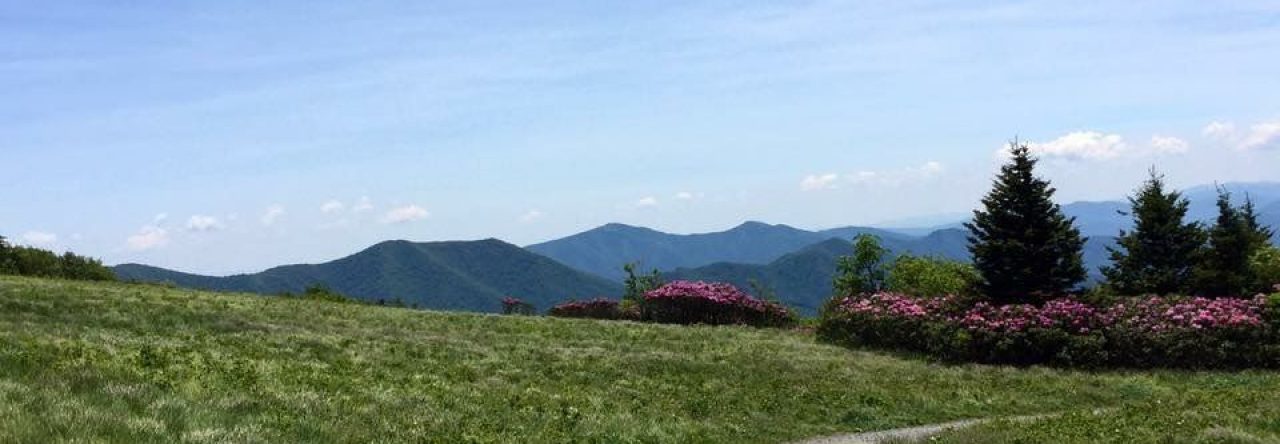
When I first read FR, I remember that I distrusted Boromir entirely. Perhaps it is because in the first two mentions of Boromir the reader is told that he is “from the South” (FR, II, II, 240) and a “stranger” (FR, II, II, 243). I already knew that the real bad guys were in the south, and that the shadowy men from Bree were “strangers.”  Perhaps, too, it was because his first action is to interrupt Elrond in order to boast about his country and ask about the Ring; at least that is how I interpreted his statements at the time.

john-howe-good-sense-revolts
Image copyright John Howe

Boromir is one of the largest detractors from the plan to destroy the ring while at the Council of Elrond. Throughout his journey with the Fellowship, Boromir is constantly preoccupied with the Ring and how it should be used, not destroyed. I think that my childhood instinct to view people, and characters, I loved as infallible played a role in the way I perceived Boromir. To me, he was ‘the enemy’ who was against the wisdom of Gandalf (whom I loved dearly, which I will cover in detail later). As such, I did not see him as a real man, as a character who was valiant yet flawed. I saw him, honestly, in the same way that many conservative American Christians see the devil: as a crafty and deceitful enemy who has his goal in front of him the whole time and picks his spots to exploit weakness. My reading was not to see Boromir as occasionally tempted, but as wholly corrupt and hiding his nature until he can sate his desires.

This interpretation of Boromir stayed with me for approximately three years. When I was sixteen, I audited a course on J.R.R. Tolkien which Dr. Amy H. Sturgis taught at a university near me. It was through her class that I first realized that Boromir was not an entirely unredeemable figure. Since then, my views on Boromir have changed drastically, but that evolution is a story for another time!

Where do we go from here?

Next, I want to talk about some of the obstacles the Fellowship encounter on the journey to Moria.

What Do You Think?

What was your first impression of Boromir?
Has your reading of Boromir changed over time?
​Let me know in the comments!

Andrew Higgins’s Experience–Tolkien Experience Project (10)

This is one in a series of posts where the content is provided by a guest who has graciously answered five questions about their experience as a Tolkien reader. I am very humbled that anyone volunteers to spend time in this busy world to answer questions for my blog, and so I give my sincerest thanks to Andrew and the other participants for this.

To see the idea behind this project, check out this page

I want to thank Donato Giancola for allowing me to use his stunning portrait of J.R.R Tolkien as the featured image for this project. If you would like to purchase print of this painting, they are available on his website!

If you would like to contribute your own experience, you can do so by using the form on the contact page, or by emailing me directly.

Now, on to Andrew Higgins’s responses:


How were you introduced to Tolkien’s work?

My father Robert Higgins was a lover of Tolkien and member of the New York Tolkien Society.  He read my brother Tom and I The Hobbit when I was about 7 and The Lord of the Rings when I was 8.  This was usually after dinner and I can still hear my father doing all the voices – he was a great Gandalf! 

What is your favorite part of Tolkien’s work?

No surprise it is Tolkien’s invention of languages and how they are intertwined with his myth-making.  From the earliest time I can remember I was fascinated with the Appendix on languages and the writing systems.  

What is your fondest experience of Tolkien’s work?

My dad reading the final “Grey Heavens” chapter [from The Lord of the Rings] and meeting him years later at the Medieval gate of The Metropolitan Museum of Art in New York when he presented my brother and I with our own copies of the newly published The Silmarillion (which I went home and tried to read in one night).

Has the way you approach Tolkien’s work changed over time?

Yes, I have become much more interested in the art of both myth-making and language invention that make up the world-building of Tolkien’s legendarium.  I have also become more interested in how Tolkien’s love and passion for primary world myth and language – through philology – informed his creative building of his legendarium.  

Would you ever recommend Tolkien’s work? Why/Why not?

OF COURSE!!!!  Tolkien’s creativity has given us a world with a depth of reality we can enter into (from various points) and explore – through which Tolkien tells some really brilliant stories which reflect in the secondary world the hopes, fears, and dreams of our own world.   


You can find more from Andrew at his Facebook page!