LotRFI Pt. 29–Wormtongue

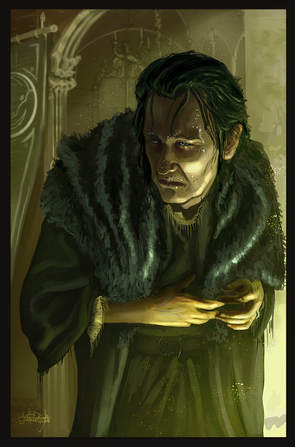
As you have no doubt gathered, I was not a very trusting child. Each time members of the Fellowship come across a character whose motives could be questioned, or where there was any vagueness whatsoever, I was quick to ascribe the worst to them. Finally, I found the kind of character I was waiting for in Wormtongue. He was deceitful, treacherous, and calculating: exactly what I expected from Maggot, Bombadil, and Aragorn when I first encountered them.

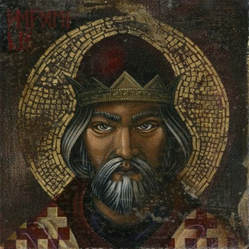
grima-wormtongue-by-suzanne-helmigh-d57tgmh
Image copyright Suzanne Helmigh

The way that Wormtongue manipulates the interaction between Théoden and Gandalf from the very beginning made me mistrustful of him. I always felt that the way Théoden stands to deliver his opening volley at Gandalf and then quickly sits again was reminiscent of someone reciting something from memory. In fact, I was reminded sharply of Sam, standing up to recite verse when he was amongst the trolls.

The fact that Wormtongue took over immediately after this speech and was the true opponent of Gandalf in dialogue made me wonder if he had written this speech for Théoden. I assumed that this was the typical modus operandi for Wormtongue. He would feed an opening monologue to Théoden, who would exclaim it from rote, and then Wormtongue would actually deal with conversations. This would lend him the king’s credibility and make it seem that they were in agreement on everything. Additionally, this process would allow Wormtongue to further his brainwashing of Théoden with every interaction, as he attempts to do when talking with Gandalf.

I think Gandalf’s power in dealing with Wormtongue is that he is quick to identify this technique and challenges it from the beginning. He ignores Wormtongue initially, and directly addresses Théoden around him. After Wormtongue’s tirade against Gandalf, Gandalf disregards the abuse, instead saying:

‘The courtesy of your hall is somewhat lessened of late, Théoden son of Thengel…[we] have passed through the shadow of great perils to your hall’ (TT, III, vi, 139).

Wormtongue tries to reassert himself into the conversation, disparaging that the traveler’s road took them through the Golden Wood. To this, Gandalf sings, and then castigates Wormtongue for speaking ill of things he has no knowledge of.

The interaction where Gandalf dismisses Wormtongue is interesting. As he cowers away from Gandalf, Wormtongue says:

‘Did I not counsel you, lord, to forbid his staff? That fool, Háma, has betrayed us!’ (TT, III, vi, 140).

This is the clearest indication so far that the power of the wizards is bound up in their staff. I think this is the point when the observation finally sunk in for me in my first reading. I did not know whether the power itself was in the staff, or if the staff was simply the most effective tool for channeling a wizard’s power. Perhaps I thought of the staff in the same way I thought of lightsabers in the Star Wars universe, something which I was incredibly familiar with. They were implements which harnessed the innate powers of the individual to a greater extent than could otherwise be achieved.

Where Do We Go From Here?

I think we will stop by Helm’s Deep, then take a look at Saruman!

What Do You Think?

What was your initial impression of Wormtongue?
What did you make of the importance placed on Gandalf’s staff?
Have I missed anything? Let me know!

Shawn E. Marchese’s Experience–Tolkien Experience Project (27)

This is one in a series of posts where the content is provided by a guest who has graciously answered five questions about their experience as a Tolkien reader. I am very humbled that anyone volunteers to spend time in this busy world to answer questions for my blog, and so I give my sincerest thanks to Shawn and the other participants for this.

To see the idea behind this project, check out this page

I want to thank Donato Giancola for allowing me to use his stunning portrait of J.R.R Tolkien as the featured image for this project. If you would like to purchase a print of this painting, they are available on his website!

If you would like to contribute your own experience, you can do so by using the form on the contact page, or by emailing me directly.

Now, on to Shawn E. Marchese’s responses:


How were you introduced to Tolkien’s work?

My first awareness of Tolkien’s work was as a child in the 1980s, when I saw a commercial on TV for Rankin and Bass’ The Hobbit on VHS. It must have included a clip of Bilbo in the cave with Gollum, because I got the idea that all of Middle-earth was underground: i.e., in the “middle” of the “earth.” I never cared much for the subterranean, so I didn’t give it a second thought. As I got older, I discovered Dungeons & Dragons, and before long I had a bookshelf full of middling fantasy paperbacks. I would occasionally hear about The Hobbit and The Lord of the Rings as I roamed this literary wilderness, but the titles just hovered on the edge of my awareness for many years.

I didn’t actually make up my mind to read Tolkien until I was fifteen. I was reading a book about a well-known rock group that originated in London in the 1960s, and on page 11 the author inserted an alluring story about how, decades earlier, a distracted college professor had written the words “In a hole in the ground there lived a hobbit” on an empty page of a student’s examination. That little act of creative rebellion greatly impressed me as a teenager, so I made up my mind to find out what this “hobbit” was, and what kind of mind it came from. On my next trip to the local Waldenbooks, I bought a box set of The Hobbit and The Lord of the Rings in paperback and read them right away.

What is your favorite part of Tolkien’s work?

I’m quite fond of the myth of Eärendil, as anyone who’s heard me talk about The Silmarillion for more than about seven minutes probably knows. Maybe it’s because Eärendil’s name was the start of it all for Tolkien, when he read that famous line of Old English poetry: “Eala earendel engla beorhtast.” Maybe it’s because of Eärendil’s central position in the legendarium, a nexus point between the Elder Days and the later stories. Maybe I just think flying star-boats are cool (who doesn’t?). But I think the real reason is because the myth of Eärendil allows me to connect the stories in the legendarium to my own life. Every time I see the evening star in the sky (I rarely wake up early enough to see it when it appears in the east as the morning star), I feel hope and wonder, as I imagine the people in Middle-earth did when they first saw the Star of High Hope rise in the sky. I feel a part of the story, and I sense my own birthright to the lessons it offers us.

And there’s so much there to learn: The importance of language and story, and their effect on how we view the world. The appreciation of nature. The need for enchantment and Faërie in our lives. The strength, hope, wisdom — and sometimes defiance — of Tolkien’s characters. And that’s what really keeps me coming back, more than the languages and history. It’s the strength of Éowyn, the wisdom of Faramir, the warmth of Gandalf, the insight of Samwise; the valor of Tuor, the loyalty of Beleg, the love of Beren and Lúthien, that makes me want to read it all again and again.

What is your fondest experience of Tolkien’s work?

My son was a cranky newborn, and nothing would get him to sleep at night except the sound of my voice or my wife’s voice. We’d spend an hour or two singing to him every night until he fell asleep, usually to find him awake again twenty minutes later! Hour after hour we’d go through this, night after night, for months.

Well, there’s only so many times you can sing the same songs over and over again before you get tired of singing. For me, that happened when he was three months old. As I looked down at the screaming baby in my arms, I realized it would be much easier for me to keep my voice going for hours on end if I was reading instead of singing. So, I picked up The Hobbit and started reading from the beginning. It was the first time I had ever read Tolkien’s work aloud, and I was struck by how much it changed my experience of the story. I could hear the music inherent in the words. I could feel the alliteration, the rhythm, the power of it all. I could keep this up all night if I had to! And the boy slept quite well.

I finished The Hobbit before he grew out of this phase, so I continued on to The Lord of the Rings. Then when my daughter was born a year or so later, I started reading The Hobbit to her at three months (she was a much better sleeper, but I wanted an excuse to read it aloud again), and continued the tradition with The Lord of the Rings after that. I’m proud to say both of my children technically were introduced to Tolkien before they were a year old, though they don’t remember it. I even read The Silmarillion aloud at bedtime to each of them when they were closer to two. I skipped some parts of “Of Túrin Turambar,” of course.

Has the way you approach Tolkien’s work changed over time?

Absolutely. As a teenager reading it for the first time, I approached it with curiosity and wonder. Despite having read many fantasy novels, I noticed immediately that Tolkien’s work was unlike anything I’d read before. By my mid-20s (right around when Peter Jackson’s Fellowship of the Ring came out), the mainstreaming of geek culture in general and the availability of movie tie-in memorabilia led me to a sense of Tolkien “fandom” as a personal identity. Now that I’m older, such labels don’t matter much to me anymore, and I just appreciate Tolkien’s work for what it is: a literary work like no other in the world, an entire mythology from the mind of one man. It’s so rich and deep that I can discover something new in it every time I go back to it, and that’s very exciting. I suppose that brings me back to an approach similar to when I read it for the first time, when everything was new; but now I have the good fortune to co-host a podcast exploring Tolkien’s work, and I get to share what I’ve found with others while participating in a conversation about these stories and this world with other Tolkien readers all over the world. That’s a fantastic feeling!

Would you ever recommend Tolkien’s work? Why/Why not?

Yes. I do it all the time. There’s something there for everyone. One reason why I spend so much time talking about Tolkien, and also why I wanted to podcast about Tolkien, is to share my love and knowledge of Tolkien with others who haven’t fully explored Middle-earth, or who think it’s all just too intimidating. There is a lot there, I realize; and I don’t expect everyone to muddle through every word of The History of Middle-earth. I even understand if someone says they can’t make it through The Silmarillion (though I’ll do what I can to help them make sense of it). But I recommend The Hobbit to everyone. Everyone should read The Hobbit at least once, and I think everyone should at least try to read The Lord of the Rings as well.


You can hear more of Shawn’s thoughts on all things Tolkien in the wonderful podcast that he co-hosts: The Prancing Pony Podcast!
LotRFI Pt.28–Théoden’s Transformation

My interpretation of the passage where Théoden shakes off the depression which has paralyzed him has changed greatly over the years. Initially, I thought that Gandalf was responsible for dispelling some effect that was placed on Théoden. I thought that Théoden’s malaise was some sort of enchantment that was placed on him by Wormtongue.  That Gandalf was a strong enough sorcerer to ward off the spell and return Théoden to his proper state.

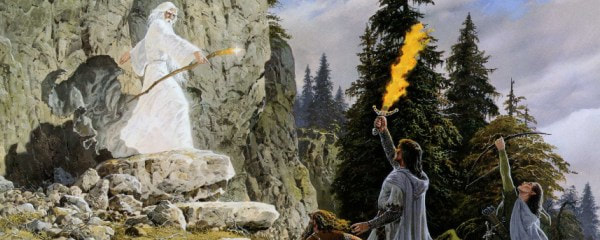
goldenhall3-3-theodenbyjohnstone
Image copyright Jay Johnstone

Many fans will notice that this interpretation is very close to Jackson’s portrayal of the event. Interestingly, when I saw Jackson’s interpretation of this scene, which agreed with my own, but made more explicit the conflict, I realized that I was wrong.

Instead of confronting some spell placed on Théoden by Wormtongue, Gandalf’s approach is a bit more nuanced. It is true that he initially uses his magic as a means of daunting: Gandalf cows Wormtongue before he addresses Théoden. When he talks to Théoden, however, the atmospheric changes that take place are the result of Théoden’s actions, not their cause. This becomes obvious in the passage where Théoden descends from his throne:

‘Slowly Théoden left his chair. A faint light grew in the hall again’ (TT, III, vi, 515).

Notice that the atmosphere does not respond to Gandalf here, but to Théoden. Gandalf is responsible for taking away Grima, who has restricted Théoden’s actions for a while, but only Théoden can throw of the burden which is placed upon him. This harkens back to Gandalf’s role as a kindler of spirit, not as the conquering hero. His task is to allow Théoden to show forth his true courage in overcoming the malaise himself.

Once the two men are outside and Gandalf is able to whisper to Théoden, there is no magic. Gandalf simply tells Théoden of deeds that may bring hope and fortify his mind against the gathering darkness. The movies overplay Gandalf’s use of magic here quite considerably. It is true that he manipulates the weather, but after this first show of strength, his main focus is on fermenting Théoden’s will, not destroying Saruman or Wormtongue.

Where Do We Go From Here?

To Wormtongue and Saruman!

What Do You Think?

How did you perceive Theoden’s transformation?
Did you like Jackson’s vision of the transformation?
​Did I miss anything? Let me know!

Always1957’s Experience–Tolkien Experience Project (26)

This is one in a series of posts where the content is provided by a guest who has graciously answered five questions about their experience as a Tolkien reader. I am very humbled that anyone volunteers to spend time in this busy world to answer questions for my blog, and so I give my sincerest thanks to Always1957 and the other participants for this.

To see the idea behind this project, check out this page

I want to thank Donato Giancola for allowing me to use his stunning portrait of J.R.R Tolkien as the featured image for this project. If you would like to purchase a print of this painting, they are available on his website!

If you would like to contribute your own experience, you can do so by using the form on the contact page, or by emailing me directly.

Now, on to Always1957’s responses:


How were you introduced to Tolkien’s work?

Apparently, my father had heard of the books through Princeton University and got them in his study. I was not supposed to read them, but I did, between the ages of 10-16, perhaps.

What is your favorite part of Tolkien’s work?

Certain chapters stand out: the Council of Elrond, the Mines of Moria, the Pellenor Fields, the Grey Havens.

What is your fondest experience of Tolkien’s work?

The movies were good, but I persist in liking the reading of the books, and I reread them all the time.

Has the way you approach Tolkien’s work changed over time?

Yes, indeed! By now, I’ve read most of the History of Middle Earth plus other things that Christopher has printed. We know a lot more of how Tolkien’s mind worked, and how he thought of things.

Would you ever recommend Tolkien’s work? Why/Why not?

Yes. I might, however, warn the potential reader of some politically incorrect or dubious things in Tolkien beforehand.

LotRFI Pt. 27–Concerning Théoden

When I first came across Théoden, I thought he was a withered old king and that Éomer would soon replace him. This made sense as a means to establish a leader in Rohan sympathetic to the Fellowship. His transformation into a true king was quite a marvel to me, and I found his reinvigorated personality to be magnetic.

672px-michael-kaluta-theoden-espies-the-serpent-banner
Image copyright Michael Kaluta

Théoden’s persona as the protector of his people made him a kind of father figure to me in my first reading. I loved his courage in the face of adversity and his determination to defend others. He is the kind of leader who has always inspired me: one who leads by example, not by command. I have such a hard time expressing my response to Théoden. This is one of those rare instances where something seems too important for words. The thoughts and feelings are there, but the words fail.

Whenever I revisit the text, I am shocked at how small Théoden’s role actually is. I always conflate his importance to me personally with his prominence in the text.

His role as the stalwart leader who comes to the aid of Gondor in the last moment foreshadows Aragorn’s arrival in similar circumstances. Unlike Aragorn, however, Théoden is not destined to keep his kingship. The fateful events surrounding the House of Eorl at the Pelennor Fields make me cry every time. I always want to save Théoden, so I can watch he and Merry settle in to have a long talk about herb-lore.

Where Do We Go From Here?

I want to talk specifically about Théoden’s transformation, then move on to address Wormtongue and Saruman.

What Do You Think

What was your very first impression of Théoden?
How did you react to his demise?
Did I miss anything? Let me know!

Timothy “Timdalf” Fisher’s Experience–Tolkien Experience Project (25)

This is one in a series of posts where the content is provided by a guest who has graciously answered five questions about their experience as a Tolkien reader. I am very humbled that anyone volunteers to spend time in this busy world to answer questions for my blog, and so I give my sincerest thanks to Tim and the other participants for this.

To see the idea behind this project, check out this page

I want to thank Donato Giancola for allowing me to use his stunning portrait of J.R.R Tolkien as the featured image for this project. If you would like to purchase a print of this painting, they are available on his website!

If you would like to contribute your own experience, you can do so by using the form on the contact page, or by emailing me directly.

Now, on to Timothy “Timdalf” Fisher’s responses:


How were you introduced to Tolkien’s work?

I was 19 or 20 and someone knew of my interests and recommended it, But I did not initially take it up. However at a summer job at a beach restaurant that year I guess I happened upon the pb books and began reading…

What is your favorite part of Tolkien’s work?

That is a hard one to answer. As the decades have passed and I have read more and more often, I find that each work enhances the others. Obviously, LotR is the best realized and most suggestive work. And it stands out. But within it there are those high intensity moments which I could never choose one over another, but the low intensity descriptions of nature are also essential to the sense of reality he build up.

What is your fondest experience of Tolkien’s work?

Simply rediscovering it with each re-reading. And the visuals and score of the films sent me back to the book. And recently coming upon a dramatic reading that combines all that is my latest happy discovery.

Has the way you approach Tolkien’s work changed over time?

Yes. My initial read, coming soon after discovering Wagner’s Ring Cycle, left me unimpressed. I found the style flat compared with the intensity of the music dramas. I could not have been more wrong. Each reading increases my appreciation and admiration for what Tolkien achieved in LotR in particular. But the interplay between the Wagner music dramas (not just his Ring) and Tolkien has become a major focus for me.

Would you ever recommend Tolkien’s work? Why/Why not?

Absolutely! The vividness of the LotR characterizations and the interplay between the characters and their situations is inspiring. I find “The Silmarillion” still quite problematic especially for being unfinished. Given Tolkien’s penchant for drastic revisions I find the various versions interesting, but also frustrating…

LotRFI Pt. 26–The White Rider

When the Three Hunters encounter a mysterious old man in Fangorn, I immediately assumed it was Saruman. His way of speaking was so obvious an attempt to avoid revealing his identity from them. There is no reason for anyone else to wish to conceal who they are so completely. The confrontation between the Hunters and the old man is so tense and the stakes so high, unexpectedly, that I thought for a moment that the Hunters would be executed in quick succession.

05-nas-02_orig
Image copyright Ted Nasmith

When this is revealed to be Gandalf, I still had a hard time understanding why he did not reveal himself straight away. Was he testing the Three Hunters? This would be similar to what Aragorn does back at the Prancing Pony with the hobbits. Surely, the powers of evil have set traps for Gandalf before!

It took me a long time to accept that Gandalf has memory issues here, and I still doubt it sometimes. He remembers so much, and is not newly revived, so I did not understand why he should have forgotten who he is when he can remember who Galadriel and Gwaihir are. All this nit picking aside, the return of Gandalf was a complete shock to me.

Of all the miraculous things that happen in books, one that I certainly never expected was the return of Gandalf. The warmth and joviality that the Three Hunters express is as nothing compared to the elation of my little eleven-year-old heart. Especially with the tidings which he brings with him. He tells the others:

Indeed my friends, none of you have any weapon that could hurt me. Be merry! We meet again. At the turn of the tide. That great storm is coming, but the tide has turned. (TT, III, v, 495)

Not only is Gandalf returned, he has returned stronger than he was. He also prophesizes that he and the others are now a part of the side which is gaining in strength, a stark contrast from the waning which characterized their forces earlier. It was a very long time before I would understand what happened to Gandalf. In my first reading, I just knew that he had died and that Something sent him back. Undoubtedly, my Christian upbringing made me assume a particular spiritual connotation to the whole event.

Where Do We Go From Here?

Onward, to King Théoden and the Golden Hall

What Do You Think?

What was your reaction to Gandalf’s reappearance?
​What did you make of his premonition?
​Did I miss anything? Let me know!

Tanya P’s Experience–Tolkien Experience Project (24)

This is one in a series of posts where the content is provided by a guest who has graciously answered five questions about their experience as a Tolkien reader. I am very humbled that anyone volunteers to spend time in this busy world to answer questions for my blog, and so I give my sincerest thanks to Tanya and the other participants for this.

To see the idea behind this project, check out this page

I want to thank Donato Giancola for allowing me to use his stunning portrait of J.R.R Tolkien as the featured image for this project. If you would like to purchase a print of this painting, they are available on his website!

If you would like to contribute your own experience, you can do so by using the form on the contact page, or by emailing me directly.

Now, on to Tanya P’s responses:


How were you introduced to Tolkien’s work?

By chance, if chance you call it. When I was 14, a few months after my family and I came to US, I went with my mother and sister to the local library to pick out a book to read together, for the purposes of learning English. We were really at a loss what book to pick. So we wandered to a random shelf. There my mother pointed to some books and said “Look, there’s Tolkien.” My sister and I never heard the name before and were puzzled, so my mother, who like us never read Tolkien either, said that she heard that “this Tolkien was sought after” by more enthusiastic book lovers in Russia. That was good enough for us. So we plucked a random book by this Tolkien from the shelf and check it out. It was called The Hobbit. We began reading it together, but my mom and sister got bored very quickly and quit. I devoured the book and been reading and enjoying Tolkien’s works ever since.

What is your favorite part of Tolkien’s work?

My favorite Tolkien’s book is The Silmarillion, but I’m having trouble pinpointing a single favorite passage or chapter in it. On the other hand, in The Lord of the Rings, I have several favorite passages. I like them for different reasons. But the one describing Gandalf’s flash of real light in Moria stands out even among them. Moria is one of my favorite locations in Middle-earth. Its perpetual darkness conceals secrets that I long to uncover. And I love the moment when Gandalf lifts this veil of mystery and gives his companions, and readers, a tiny glimpse of what they are missing.

What is your fondest experience of Tolkien’s work?

Being part of the Tolkien community and being able to share the love for the works of my most favorite author with like-minded people through discussion, speculation and humor. I was a solitary and lonely fan for twenty years. When I joined the Tolkien Society Facebook group, I was overjoyed to finally find someone to talk to about all things Tolkien.

Has the way you approach Tolkien’s work changed over time?

Yes and no. It was really natural progression over time, fueled by age and exposure to the Tolkien’s fandom. This is how it went: This is such a great story, can’t wait to find out what happens next. —> Arda is such a rich world, must know every detail. —> These books are great works of literature, must think of all the different themes that the author included and tried to explore in his works. —> There are so many influences, references and allusions to external sources both literary and historical, must find all these hidden gems and thoroughly analyze them. But my greatest interest always was and still remains Arda itself – it’s history, metaphysical structure and internal workings.

Would you ever recommend Tolkien’s work? Why/Why not?

Yes I would if I ever get a chance because I think that a person of almost any age will find something interesting in Tolkien’s books. But unlike many other fans, I generally like to talk Tolkien only to the people whom I already know to be fans. And though I recommended the “next Tolkien book” many times, I almost never get an opportunity to recommend it to someone who never read Tolkien before.


Interview on The Tolkien Heads

I wanted to share that I recently recorded an interview with The Tolkien Heads!

We were able to talk about my PhD Research looking at young readers of The Lord of the Rings, Beowulf, and some proverbs from the text I had always been curious about!

If you are interested in hearing the latest about my PhD research and some other fun Tolkien bits, you can find the episode on their website!

The Tolkien Heads is also available on iTunes and Stitcher, my interview is episode #55.

LotRFI Pt. 25–Uruk-Hai

The third chapter of book three was an odd experience for me as a reader. I have to admit that it took me a little while to find my bearings and understand that the narrative had jumped to a different perspective than the previous chapter.

Once I found my legs, though, I was intrigued to walk among the Uruk-Hai in their camp and to watch their march through Rohan. I was not quite sure what to make of these characters because, up to this point, they had been nameless, faceless sources of dread. Now, I had to confront their being in a completely different way.

alan-lee-orc-hunting-2
Image copyright Alan Lee

The chapter was effective in making me understand how the Orcs interacted with one another with malice without making me question whether or not they had a sense of humanity. I understood that these characters were mean, ruthless, and cruel, but did not question their motivations or whether or not they could be redeemed. My claim is not that Tolkien wrote the Uruk-Hai simply, but that I read them simply when I was a child. The kind of in-fighting and bickering portrayed among the disparate bands on the march was something I could relate to. The contrast between the milieu of this terse, selfish group and the rather unselfish, supportive climate of the Fellowship made a solid impression on me.  I think that I somehow unintentionally internalized these groups as exemplars to apply to my life: good groups (that is, groups that function well and where everyone is appreciated, not morally just groups) look like the Fellowship, bad groups look like the Uruk-Hai.

Pippin and Merry evolve a lot over this passage, but I want to side-step that conversation for now and come back to it when I do a character analysis of each of them, probably in book V.

Where Do We Go From Here?

The White Rider, of course!

What Do You Think?

What impression did chapter three make on your reading?
Did it change the way you perceived the Orcs and Uruk-Hai?
Did I miss anything? Let me know!