Mary Reid’s Experience — Tolkien Experience Project (177)

This is one in a series of posts where the content is provided by a guest who has graciously answered five questions about their experience as a Tolkien fan.

To see the idea behind this project, or if you are interested in sharing your own, visit the project homepage. If you enjoy this series, please consider helping us fund the project using the support page.

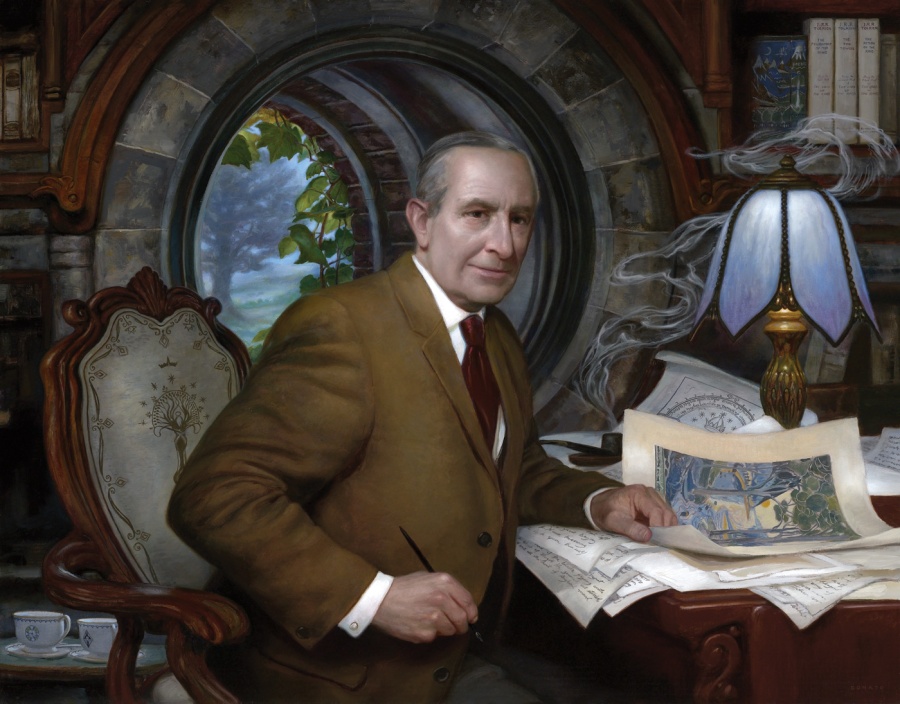
I want to thank Donato Giancola for allowing me to use his artwork for this project. Prints are available on his website!

Now, on to Nick Polk’s responses:


1. How were you introduced to Tolkien’s work?

My parents were fans of Tolkien, as was my oldest brother. The earliest experience of Tolkien that I remember was a dramatized audiobook adaptation of The Lord of the Rings, complete with sound effects and music. I remember it as very dramatic and exciting, and listening to the audio dramatization led me to pick up the book. Even before that, though I don’t remember it because I was very young, my eldest brother read the books to the whole family, complete with sound effects, voices, and even a tune for the songs.

2. What is your favorite part of Tolkien’s work?

It is very difficult to pick a favorite part of Tolkien’s work, as there is so much that I love: the prose and Tolkien’s beautiful language, the poetry, the unfolding of the story. If I had to pick one element, it would likely be the sense of hope even in the darkest parts of the story. No matter how dark the world seems, there is always light, and good will always prevail, no matter how long and difficult the path to that victory. There is a sense of goodness and faith that pervades the story, and I love it. It gives me hope. If I did have to pick a single scene, it would likely be the Charge of the Rohirrim.

It is a scene charged (pun intended) with hope, men and women keeping faith with one another. It is a stirring action-piece, and I get chills every single time I read it. The way the scene is interwoven into the narrative, with what comes before and after it, is incredible.

3. What is your fondest experience of Tolkien’s work?

Immersing myself into the world Tolkien created, staying up far too late to read one more chapter, listening to Howard Shore’s otherworldly score, and finding myself drawn into Middle-earth as into no other fictional story.

4. Has the way you approach Tolkien’s work changed over time?

Yes, it has. I studied English in college, including literary analysis, which gave me a toolkit for reading literature. My English degree gave me a greater regard for Tolkien’s skill and a better understanding of how he crafted The Lord of the Rings. Additionally, I have joined Tolkien communities and learned more of how others read and experience Tolkien’s writings. I have gained appreciation for different perspectives and interpretations of the text.

5. Would you ever recommend Tolkien’s work? Why/Why not?

Absolutely! I recommend Tolkien to fantasy fans, literary fans, and readers who want beautiful language and themes of hope, courage, and love. I don’t always recommend Tolkien; in addition to literature’s highly subjective nature, some readers find Tolkien’s lyrical prose frustrating, or dislike the pace of the narrative. However, The Lord of the Rings is undoubtedly the fantasy book I have recommended the most often.


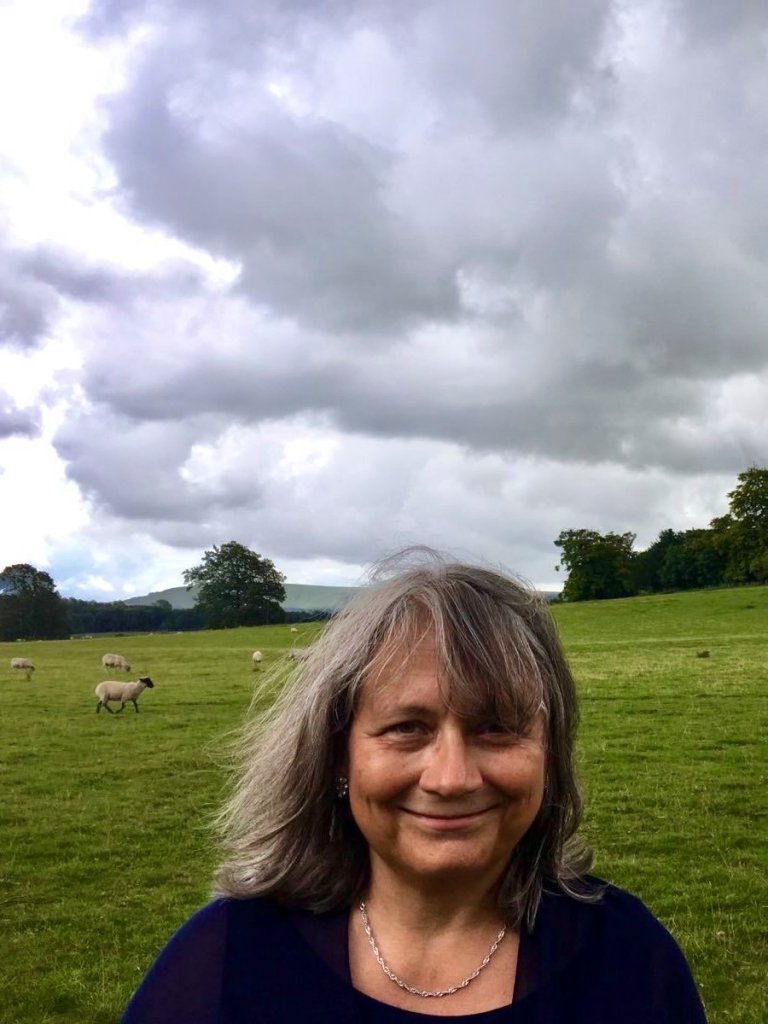
You can find more from Mary Reid on Goodreads!

Robert Steed’s Experience — Tolkien Experience Project (176)

This is one in a series of posts where the content is provided by a guest who has graciously answered five questions about their experience as a Tolkien fan.

To see the idea behind this project, or if you are interested in sharing your own, visit the project homepage. If you enjoy this series, please consider helping us fund the project using the support page.

I want to thank Donato Giancola for allowing me to use his artwork for this project. Prints are available on his website!

Now, on to Robert Steed’s responses:


1. How were you introduced to Tolkien’s work?

As far as I remember, I was first introduced to Tolkien in the third grade when the teacher started reading a chapter from The Hobbit during reading time each day. While I remember enjoying that, it did not move me to engage with Tolkien then. It was not until middle school when I read The Lord of the Rings that I started to really enjoy and engage with Tolkien’s work on a more sustained basis.

2. What is your favorite part of Tolkien’s work?

I am sure this is a common response, but it is difficult to identify a single favorite part. What my favorite is seems to shift from day to day, from season to season, from age to age, and from mood to mood. That said, parts which I always enjoy are the Ainulindale, Akallabeth, “Riddles in the Dark” from The Hobbit, “The Council of Elrond” from LoTR, and “On Fairy Stories.” I could add a great deal more, but then the list would become absurd. It would probably be briefer and easier to list what I do not enjoy.

3. What is your fondest experience of Tolkien’s work?

Not too long ago, I would have said that my fondest experience was when I was simply discovering the legendarium for the first time and starting to plumb its depths. More recently, since I started organizing a small conference and participating in various Tolkien groups, I find that sharing Tolkien’s work and having the chance to learn from others in congenial settings is creating my new fondest experience(s).

4. Has the way you approach Tolkien’s work changed over time?

Certainly it has. As a teenager I read it primarily for the fantasy elements and the action sequences. Since then, my attention has shifted much more to the relational and interpersonal aspects of Tolkien’s work, with a particular interest in the philosophical, metaphysical, and religious underpinnings and themes of it. The attention he devotes to meditating upon the nature of mortality throughout his legendarium has proven to be deeply meaningful for me. There is a strong phenomenological dimension to Tolkien’s work as well, both academic and literary, and that is fascinating. I also pay more attention to the potentially problematic aspects of both Tolkien’s legendarium and his scholarship. Tolkien is a genius, but not beyond criticism; I do not think he would accept being idolized.

5. Would you ever recommend Tolkien’s work? Why/Why not?

Yes, I would and do recommend it, but gently. Tolkien’s work is deceptive in a way; the fiction can be read purely at the level of story/plot, but of course the reader does not have to stay at that level. There’s always layers of possible interpretation below the surface and beyond the plot. It’s like an onion centered within a Ptolemaic universe—-layers upon layers, wheels circling above circling wheels. Tolkien seems to have thought about and to care about everything, from the smallest seemingly trivial detail of plot to the structure of language to the nature of love and evil, all the way to abstract metaphysics and ontology. Taken as a whole, there is literally something in his work for everyone.

TEP #39 — Elizabeth King

For this episode, Sarah talked with a researcher who looks at Tolkien’s works through a lens of trauma studies: Elizabeth King!

Elizabeth is a PhD student and Graduate Research assistant at the College of Family and Consumer Sciences at the University of Georgia. Her information page on the university site says that she is currently working “on projects related to developing ecologically responsive multi-component systemic interventions for populations exposed to mass traumas.” This approach informs her reading. We were so glad she could talk with us!

Unedited video of this interview is available exclusively to our patrons on Patreon! Subscribing at $5/month gets you access to video interviews, behind-the-scenes information, early releases, an exclusive patron-only series, and other bonus content!

Links to audio of this interview are below!

Subscribe to the podcast via:

Please consider supporting the Podcast on Patreon!

Comments or questions:

  • Visit us at Facebook or Twitter
  • Comment on this blog post
  • Send us an e-mail from the contact page
  • Email TolkienExperience (at) gmail (dot) com

Matt’s (Nerd of the Rings) Experience — Tolkien Experience Project 175

This is one in a series of posts where the content is provided by a guest who has graciously answered five questions about their experience as a Tolkien fan.

To see the idea behind this project, or if you are interested in sharing your own, visit the project homepage. If you enjoy this series, please consider helping us fund the project using the support page.

I want to thank Donato Giancola for allowing me to use his artwork for this project. Prints are available on his website!

Now, on to Matt’s responses:


1. How were you introduced to Tolkien’s work?

I was a freshman in college in 2002. That very month, Fellowship of the Ring was released on DVD. My best friend and roommate, on our initial trip to the local Walmart suggested we buy a couple movies, including FOTR. My response? “I don’t know. That looks kinda dumb.” He convinced me to give it a shot, and the rest is history. I was hooked. By the time we see the Argonath, I was in complete awe of Middle-earth. I HAD to know more! As the credits rolled I turned to my friend with indignation, “Is that how it ends?! Is there another movie?!” Needless to say, I was now a LOTR fan.

2. What is your favorite part of Tolkien’s work?

The sheer size and scope of the world he created is incredible. I love that you can study and research Middle-earth and its events as if it were actual history. The themes are timeless and universal. The characters are varied, memorable, and compelling. The land itself is iconic and a place I’m happy to escape to anytime.

If you’re looking for an answer of a specific book, I love them all! For a fun, casual read, I will pick up the adventures of my favorite hobbit, Bilbo, in The Hobbit. The Lord of the Rings is classic and can’t be omitted from my list. However, I am a big fan of Children of Húrin – an incredible, albeit tragic tale worthy of its better-known counterparts.

3. What is your fondest experience of Tolkien’s work?

There are so many. As a father, sharing Midde-earth with my young children through reading The Hobbit to them and playing the LEGO video games is such great fun. Guiding my kids to becoming readers and fellow nerds is a pretty great “dad win”.

More recently, the wonderful interactions I’ve had with countless Tolkien fans through my Nerd of the Rings YouTube channel has been an incredible experience. It’s gotten far bigger, far quicker than I ever imagined and I’m so thankful to be able to share our love of Middle-earth among such excellent and admirable hobbits!

4. Has the way you approach Tolkien’s work changed over time?

Yes and no. Since rushing out to buy the boxed set of The Hobbit and The Lord of the Rings after seeing The Two Towers film, it’s been a steady dive, deeper and deeper into the lore. The only thing that has changed is that I now research not just for my own curiosity, but also so I can create videos to share my love of Tolkien with others on the channel.

5. Would you ever recommend Tolkien’s work? Why/Why not?

Yes, yes, a thousand times, yes! Middle-earth is a world that has no equal – and likely never will. No matter who you are or where you come from, you will likely find something to enjoy in Tolkien’s world. It is simply incredible.

On a personal note, my friend who introduced me to LOTR tragically passed away in a car accident back in 2004. It was my times spent in Middle-earth (and Harry Potter), that helped give me a break from those hard days. Anytime I’ve experienced hardships or tragedy, I know I can take a respite by going to Middle-earth and allow myself some healing time. In my opinion, there is no better place to escape to than the world which Tolkien has gifted us.


You can find more from Matt on his YouTube channel!

Serena’s Experience — Tolkien Experience Project (174)

This is one in a series of posts where the content is provided by a guest who has graciously answered five questions about their experience as a Tolkien fan.

To see the idea behind this project, or if you are interested in sharing your own, visit the project homepage. If you enjoy this series, please consider helping us fund the project using the support page.

I want to thank Donato Giancola for allowing me to use his artwork for this project. Prints are available on his website!

Now, on to Serena’s responses:


1. How were you introduced to Tolkien’s work?

I was first introduced to Tolkien’s work when The Lord of The Rings films came out, but it wasn’t until The Hobbit films came out that I actually started paying attention to the books. I fell in love short after.

2. What is your favorite part of Tolkien’s work?

There are two things that come to mind when thinking about this question. The first is the way the books are written. I feel understood when I read Tolkien’s books, like my emotions and experiences are tied to those of the amazingly well written characters, as if I myself were part of the story. Every word is so perfectly placed, I can’t help but feel like Tolkien’s writing is as close prose can get to music and poetry. I find there is something profoundly sentimental about Tolkien’s works, not just in the adventures, but in how these are described.

The second is the work he put into creating a world for his languages – I have always been amazed by the fact that was the order of creation, not the other way around. This denotes such a passionate interest, and as someone who is interested in languages, it makes me wish I could go back in time and be one of his students.

3. What is your fondest experience of Tolkien’s work?

The fondest experience I have of Tolkien’s works are all related to The Hobbit, films (oddly) and book. I was in a really bad place mentally, when The Hobbit films came out – I was a teenager struggling with depression, desperately looking for a way out of a home and situation that was more or less destroying my spirit. Not long after the last film in The Hobbit trilogy came out, when I was 18, one of my closest friends died unexpectedly and I found myself completely alone. At that point, I got attached to a world and characters that felt like they could understand me: desperately trying to belong somewhere, and seemingly always failing. This brought me relief, knowing that someone out there knew what I was going through.

This feeling only strengthened once I started reading the book, when I found that I could also find comfort in Tolkien’s actual words. It seemed to me like each and every word I was reading was a brick that I could use to build myself the home I never had. I find it really difficult to explain how his words make me feel, so I hope that the metaphor clears it up a little bit.

4. Has the way you approach Tolkien’s work changed over time?

It’s been a very eventful few years since I was first introduced to his works, but each time I go back to them (mostly to the films, they are just that little bit quicker to get through), something feels just slightly different. I think the biggest difference I have noticed, while re-reading The Hobbit and re-watching the trilogies this Christmas, is that I have felt happy to be part of them, as opposed to feeling a strong need to be understood and included in them. I have also felt a lot more inspired by them to go and do something meaningful with my life, to put my creativity towards those projects that I have dreamt about, but that I have never found the motivation to actually start.

5. Would you ever recommend Tolkien’s work? Why/Why not?

I tend not to show the “Tolkien fan” side of myself to anyone that I am not close to, but I have gifted The Silmarillion to a close friend after reading it, because I just found it so interesting that I couldn’t keep it to myself. I would also say my partner is probably sick of hearing me talk about Tolkien’s books. Unfortunately, I am not friends with many readers, and all the other people I am close to have already watched the films. However, if the situation presented itself, I would definitely recommend all of it – books, films, histories, all of it.

TEP #38 — Anna Smol

For this episode, Sara was able to sit down with her good friend and veteran Tolkien academic: Anna Smol!

Anna is currently a professor in the Department of English at Mount Saint Vincent University. She has also served as an adjunct faculty member in the graduate English program at Dalhousie University and in the Joint M.A. in Women and Gender Studies (Saint Mary’s University and Mount Saint Vincent). Her research interests include Tolkien studies, medievalism, and Old English, and she has published her work in many refereed journals.

Video of this interview is available exclusively to our patrons on Patreon! Subscribing at $5/month gets you access to video interviews, behind-the-scenes information, early releases, an exclusive patron-only series, and other bonus content!

Links to audio of this interview are below!

Subscribe to the podcast via:

Please consider supporting the Podcast on Patreon!

Comments or questions:

  • Visit us at Facebook or Twitter
  • Comment on this blog post
  • Send us an e-mail from the contact page
  • Email TolkienExperience (at) gmail (dot) com