Maria do Rosario Monteiro’s Experience–Tolkien Experience Project (51)

This is one in a series of posts where the content is provided by a guest who has graciously answered five questions about their experience as a Tolkien reader. I am very humbled that anyone volunteers to spend time in this busy world to answer questions for my blog, and so I give my sincerest thanks to Maria do Rosario Monteiro and the other participants for this.

To see the idea behind this project, check out this page

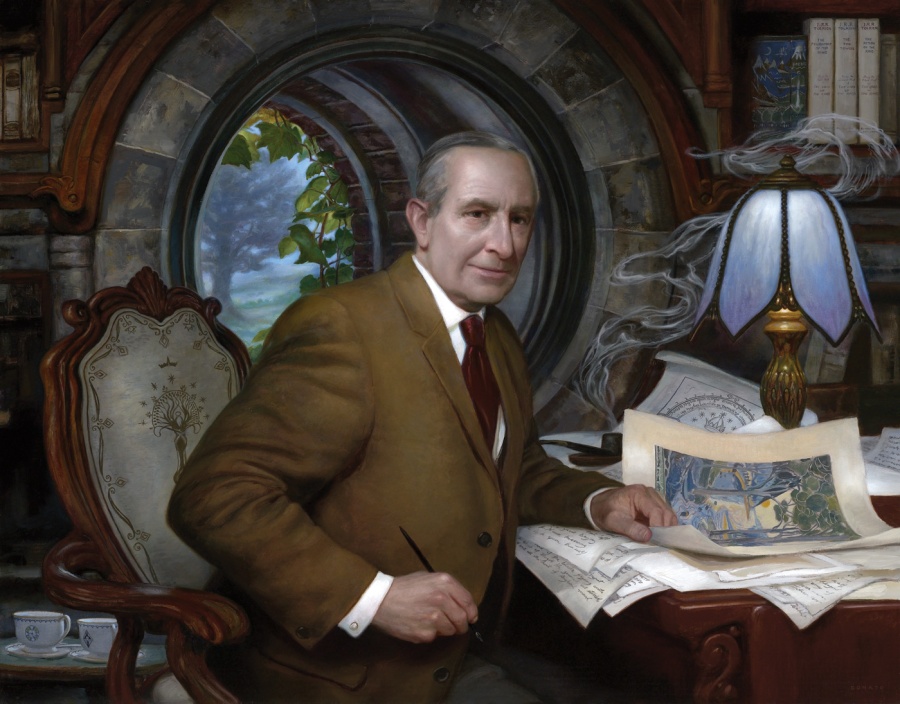
I want to thank Donato Giancola for allowing me to use his stunning portrait of J.R.R Tolkien as the featured image for this project. If you would like to purchase a print of this painting, they are available on his website!

If you would like to contribute your own experience, you can do so by using the form on the contact page, or by emailing me directly.

Now, on to Maria do Rosario Monteiro’s responses:


How were you introduced to Tolkien’s work?

By a side comment made by Professor Sansonetti while giving a lecture on alchemy during my Master in Comparative Literature at Universidade NOVA de Lisboa, 30 years ago.

What is your favorite part of Tolkien’s work?

I do not have one! There are several: The LOR, The Cosmogonic myth in Silmarillion, “The fall of Númenor”, Unfinished Tales, etc.

What is your fondest experience of Tolkien’s work?

The discovery of multiple layers of intertwined myths

Has the way you approach Tolkien’s work changed over time?

It changes every time I re-read it because in 30 years I have changed also.

Would you ever recommend Tolkien’s work? Why/Why not?

Yes. There is a bunch of reasons I cannot outline in a single answer. Usually, it takes me a whole semester teaching it, and I never get to the bottom. There is no way anyone who reads Tolkien will not become a “re-reader.” And the movies are a different creation, using a different art, that does not substitute the books. My advice is always the same: first, read the book, create your inner image of each character and of the space, get the feeling of traveling WITH the hobbits. Then, see the movies. If one does not follow this order will lose forever the ability to became a sub-creator of Middle-earth, that is what readers are or should be. Do not lose the possibility of imagining your own Galadriel, your own Gandalf, etc.


For more thoughts on Tolkien and other topics from Maria do Rosario Monteiro, you can follow her on Twitter and Facebook.

LotRFI Pt.53–Mount Doom

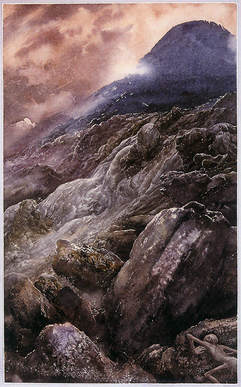
The consistent theme surrounding Mount Doom is whether Frodo fails in his quest. I must admit that this was not an issue to me in my first reading. “Failure” was not really a concept I questioned at all. The quest, in the end, was successful, and Frodo played the largest part in it. Therefore, I saw Frodo as a successful hero. Granted, this interpretation has been problematized over the years, but it is an accurate account of my initial response.

alan-lee-the-lord-of-the-rings-iii-6-03-the-mount-doom
Image copyright Alan Lee

I observed all the instances foreshadowing Frodo’s decision in my subsequent reading. In that first experience, though, Frodo’s refusal to destroy the Ring was an utter shock. Then I read as one dumbfounded as Gollum’s greed brought about the destruction of the Ring. This was certainly a plot twist unlike almost anything else I had read up to that point in my life. Again, I knew that there was no such thing as coincidence in Middle-earth, therefore this seemed like a providential moment. I remembered Frodo’s recollection of Gandalf’s words just prior to entering the heart of the mountain, and the idea of mercy rang through for me, even as a child.

A quick side note, I should mention that, for all the faux grief aimed at Tolkien for calling this most important place Mount Doom, I always rather liked the name. It reminded me of the simple names of the Shire, and made the end seem not so distant or so harsh as it ultimately was.

As a final note, the escape from Mount Doom on the wings of the Eagles was certainly an unlooked-for joy to me. The deterministic coincidences leading up to this occurrence prepared me to accept it as a significant aspect of Middle-earth, not as some form of Deus ex Machina from Tolkien himself. Of course the Eagles came: they were part of the fate that governed the quest from the beginning! This made sense to me in my first reading.

Where Do We Go From Here?

To think about Sauron and Evil, then Aragorn as King.

What Do You Think?

How did you react to the events on Mount Doom?
Which surprised you the most?
Did I miss anything? Let me know!

Alex B’s Experience–Tolkien Experience Project (50)

This is one in a series of posts where the content is provided by a guest who has graciously answered five questions about their experience as a Tolkien reader. I am very humbled that anyone volunteers to spend time in this busy world to answer questions for my blog, and so I give my sincerest thanks to Alex and the other participants for this.

To see the idea behind this project, check out this page

I want to thank Donato Giancola for allowing me to use his stunning portrait of J.R.R Tolkien as the featured image for this project. If you would like to purchase a print of this painting, they are available on his website!

If you would like to contribute your own experience, you can do so by using the form on the contact page, or by emailing me directly.

Now, on to Alex B’s responses:


How were you introduced to Tolkien’s work?

My Dad read The Hobbit to me, and then, despite having some reservations, the Lord of the Rings. I can’t say exactly how young I was then, but I do remember that I certainly couldn’t manage to read the books myself yet.

What is your favorite part of Tolkien’s work?

To be as succinct as possible: The truth of it.

To expand a bit more: The fully-realized secondary world, with palpable ancientry, geography, culture, language, and complexity. I think it’s dangerous to suggest fiction is only worthwhile–or even is most worthwhile–when it says things about our own selves, and our own world; and yet it must be said that Tolkien, in his fantasy, managed to depict our reality in a way that *feels* more true than almost any so-called realistic depiction. In that way he shows to be false the dichotomy between myth and our present lived experience, making our world all the more wondrous.

What is your fondest experience of Tolkien’s work?

I remember vividly my “fall in love” moments, the successive eu/catastrophes in both The Hobbit and LOTR. But, if I can be a little cliché, the only possible answer is that every experience is my favorite, and none of them are. Having the books read to me and skipping school to see the first film with my Dad (I’m 30) will always be treasured bonding experiences; Tolkien’s Boethian (or at least Boethi-esque) depiction of fate and acting in the face of it, grieving yet grimly optimistic, have informed my general ethic and shaped how I’ve responded to hardship and tragedy in my adult life. (There was no doubt which author I would read while working on the one eulogy I’ve given; and there’s a reason that one eulogy had three lines that got laughs, and celebrated life in the face of promised death.) However, there is still a lot to be said for those quiet nights alone with an old paperback, stripped of any outside context.

Has the way you approach Tolkien’s work changed over time?

Yes; and so has the way it approaches me, which is perhaps nearer to how I experience it. At first, I delighted in the adventure, the danger, and the great expansive travel. But now, having read everything I know to have been published with Tolkien’s name on the cover and consumed a massive amount of the related literature, podcasts, and lectures… well, I still delight in the adventure, the danger, and the great expansive travel. But I also appreciate the depth of scholarship baked into the fiction, as well as the ephemeral wisdom. There is beauty in the world–indeed, there always has been–and the fact that it will pass, as did that which came before, is no reason not to behold it all with wonder and gratitude.

Would you ever recommend Tolkien’s work? Why/Why not?

I would, but I tend not to do so explicitly. My enthusiasm, I think, speaks loudly enough; and there’s some danger in insisting on a kind of genre canon. So long as the people I care about are reading things they care about, I’m happy.

LotRFI Pt.52–Frodo

I have waited this long to address Frodo as a character because he was one of the most difficult characters for me to understand in my first reading. While the narration often seems to hover around Frodo, it was never clear to me what his motivations were or how he was truly feeling, especially in Book VI.

133-mor-jh-port_orig
Image copyright John Howe

Frodo was my least favorite of the hobbits when I first read LotR. I found him very difficult to identify with because he seemed more focused than the other hobbits and, generally, kept his gaze toward greater concerns than the others. In a way, it strikes me now, Frodo is a more adult figure than the other hobbits. While he is not on the level of the Big People with his knowledge and experience, he is more mature and worldly than any of the hobbits, or at least he acts that way. I never liked Frodo’s character very much because he struck me as the patient sufferer, a role I never have been able to relate to; I have often been accused of not suffering fools gladly.

Even though this is the case, I still respected him greatly for the role he plays in destroying the Ring. When I heard others contend that Sam, not Frodo, was the true hero of LotR, I was defensive immediately. Frodo carries a burden unique from the rest of the Fellowship. I understood that distinction instantly, and felt that awarding the title of hero to anyone else was demeaning that burden. While I admired Frodo and thought him the true hero of the story, I could not see much of myself in him.

Where Do We Go From Here?

To Mount Doom, then to think about Sauron and the nature of Evil in LotR​.

What Do You Think?

How did you first read Frodo as a character?
How did he compare to the other hobbits?
Did I miss anything? Let me know!

Brad Thompson’s Experience–Tolkien Experience Project (49)

This is one in a series of posts where the content is provided by a guest who has graciously answered five questions about their experience as a Tolkien reader. I am very humbled that anyone volunteers to spend time in this busy world to answer questions for my blog, and so I give my sincerest thanks to Brad and the other participants for this.

To see the idea behind this project, check out this page

I want to thank Donato Giancola for allowing me to use his stunning portrait of J.R.R Tolkien as the featured image for this project. If you would like to purchase print of this painting, they are available on his website!

If you would like to contribute your own experience, you can do so by using the form on the contact page, or by emailing me directly.

Now, on to Brad Thompson’s responses:


How were you introduced to Tolkien’s work?

I was first introduced to Tolkein’s work when I was nine years old, so I would be in year five at my junior school in Sheffield, England. I was told by my teacher to read this book as it was a fantastic book to read and that I would get lots out of it. When I flipped through the pages the very first time I picked it up, I realised there were little or no pictures, and this was going to be a huge problem for me, because even though I was nine years old and had the reading age of an average fifteen year old, I always had issues with my imagination. Basically, I’ve never been able to turn written text into an image in my head. However, I persevered and forced myself to read the whole book.

I did not enjoy it. And that was such a shame because there were parts of it that I liked but without the illustrations and without being able to fully picture what was going on in the story I couldn’t really can appreciate the book for what it was. And so, it would be another seven or eight years before I took up my interest in anything to do with Tolkein’s work. Fast forward to the year 2003, and I decided, with my friends, to play The Lord of the Rings: The Two Towers on the PlayStation 2, which I absolutely adored. Then, I decided that I needed to watch the films, so I watched the first two films on DVD and the final film, The Return of The King I went to see the pictures, on New Year’s Eve 2003, and it was absolutely brilliant.

Fast forward another nine years or 10 years, and The Hobbit films came out, where I then found a YouTube Channel, The One Ring. Net, and began to watch all their shows surrounding all things Middle-earth, and obviously, the build up to the release of The Hobbit films. And so, I decided to read all the books from the very beginning. I started by reading The Hobbit, again, which I loved, and now I didn’t have to picture that much in my head because I already knew the characters and many parts of Middle-earth in my head, because of the films and also knew that I would be going to the pictures to see the film and so I would see what was in the book anyway. Now I could fully appreciate the text, and I can’t wait to read it to my son.

From there in 2015, I decided to read The Silmarillion, with the aid of Rob Shaw and the audiobook, it is the best thing I have ever read, and may ever read. And now, I have read The Lord of the Rings, and so I will look to the future to read the Unfinished Tales, The Lost Tales and all the other works in Tolkein’s legendarium.

What is your favorite part of Tolkien’s work?

My favourite part of Tolkein’s work would have to be Fingolfin’s challenge to Morgoth. Fingolfin from the very beginning proved that he was a completely, utterly fantastic character. Before the Noldor left Valinor, Fingolfin stood up to his brother Feanor, who drew his sword, without the use of force or aggression. In that moment he proved that he was steadfast, was strong mentally, and had a heart made of something else. When he chose to follow his brother, he showed that he was loyal to him and his father’s house, and all of the Noldor and the rest of the elves and the blessed realm could follow him one day as the High King of the Noldor because of those qualities which he displayed in that moment.

When it came to the battle with Morgoth, Fingolfin proved to all in Arda that Morgoth was not invincible. He proved that Morgoth could be wounded and that he had weaknesses, and that he could be beaten. His splendour was simply beautiful, from the horse ride to the gates of Angband, to his shining sword and shield in the fight, and even his death, was rather spectacular, if not rather heartbreaking. Fingolfin’s life and final fight showed that the curse of the Noldor, through the Oath of Feanor, was something that was not present in all of the Noldor, and that they were prepared to take a stand with their kin.

What is your fondest experience of Tolkien’s work?

My fondest experience of tokens work has actually yet to come, as it will be the experience of listening to my children read The Hobbit (and other Tolkien works) to me. Interestingly, my son a couple of years ago, helped me on a few co-op levels on LEGO The Hobbit game for the PlayStation 3, and forever will those memories stay with me, not just because it was my son and he was playing the LEGO The Hobbit game with me, but because he was actually just so good at it and he loved it so much. After Christmas this year I will read the graphic novel of The Hobbit to my son who is now five and then next year I will read with him The Hobbit. He is almost a fluent reader so I expect him to be able to read it, and I very much look forward to being able to listen to him, and this is also the same for my second son who is younger. The only other thing that could delight me is if my wife suddenly decides to watch the films with me and become a fan. But I doubt this will ever happen.

However, my fondest experience so far would have to be meeting Sylvester McCoy and John Rhys Davies at Sheffield ComicCon 2014. Fortunately I was lucky enough to meet them both and in particular John was a complete joy and pleasure to speak to. He asked me in great detail about my work as a primary school teacher which led him to write a wonderful message on a photograph of him dressed as Gimli, which I will treasure forever. On the photograph he wrote “Children! Behave! Listen to Mr. Thompson as he is wise, smart and will make you better people…” We spoke for a good 20 minutes while there was nobody else coming to see him and I just felt that I was talking to somebody who was just a wonderful person, as well as being an amazing actor.

Has the way you approach Tolkien’s work changed over time?

The way in which I approach Tolkein’s work has changed over the last few years, and may continue to change. Tolkein’s works started out as a hobby, something that I was interested in but didn’t really take that seriously. However, now I would say that I take it more seriously. So for me, the seriousness of which I approach his works has gone up to a level which I did not think that it would ever go to, because I didn’t think that I would love it as much as what I have come to love it. For me, that means that now I have read the books, I used to religiously watch TOR.N on YouTube, I listen regularly to The Prancing Pony Podcast, and now I have joined The Tolkein Society and will go to Tolkein 2019.

Moreoever, as a primary school teacher I wish I could do more to teach Tolkein’s work, in particular The Hobbit, in schools so that children get this fantastic experience of something which I didn’t quite have as a child. And actually, because I couldn’t engage with it when I was young, makes me more motivated to pass it on – for me as a teacher, I know how to be able to teach Tolkein’s work to children so that they too can access something which many may never have thought they would before. Whether it’s children like me who struggled with big chunks of text and little imagination, if schools don’t teach it, or the fact that some children who think it isn’t cool – I know that there are so many children out there who I could engage with who otherwise wouldn’t have. Also, sadly, I think parents show the films to their children, and they never consider or forget the literature. So the second part of my approach to Tokein’s work would be to be able to teach it to small children through the parents! I’d get them into The Hobbit too and then the children into all the ‘child-like-ways’, toys, games, videogames etc… so that they can become a lifelong Tolkein fan.

Would you ever recommend Tolkien’s work? Why/Why not?

In all honesty, I recommend Tolkein to anyone and everyone, even when they have told me that they are never going to be a fan. I can’t help myself but tell everybody how much I love his work and how fantastic it is and that they must read the books, they must listen to the audiobook, they must listen to The Prancing Pony Podcast, they must join The Tolkein Society, and they must do all these things that I have just started to do with the last couple of years because it is just so fantastic. I tell everybody all the time and I will continue to tell them.

Although, I love having better knowledge than all my friends and I’ve been able to tell them and teach him things I didn’t know, but have now learned. For example, getting them to know more about Balrogs in The Lord of the Rings: The Fellowship of the Ring for example. Finally, the one thing I really love about Tolkein’s works is having the potential for an amazing in-depth discussion over the characters, their motives, events that happen, what could’ve happened, what should’ve happened, and how it would’ve played out if I’d been a character, or even how I would’ve played out if I had written the parts or even a book as part of the legendarium. These kinds of thoughts are something that go round my head a lot and I like sharing these with all my friends, and anyone who will listen.
 

LotRFI Pt.51–Cirith Ungol

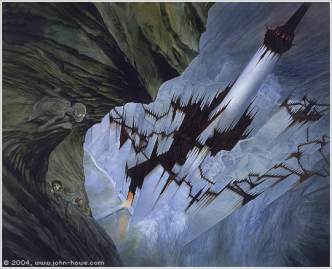
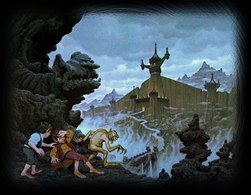
Book VI was very different from anything I remember reading before it. The brooding darkness of Mordor sat on every page, and the malaise of the place seemed to imbue itself into me as I read. I remember wishing that I could read about Gondor again and feeling slighted that I was left uncertain as to the outcome of the battle at the Black Gate. Frodo and Sam seemed like two very unlikely heroes in this setting, surrounded by darkness and so vastly outnumbered that their quest seemed impossible; however, I am getting ahead of myself.

morgul2
Image copyright Greg and Tim Hildebrandt

The Tower of Cirith Ungol was a pinnacle of Frodo and Sam’s journey. Here I experienced Sam’s meta-moments again, his commentary on how good always shines out among the darkness. I have felt this passage keenly in subsequent readings. In my first readings, though, it seemed like wishful thinking. Sam projecting what he wants to be true on his physical surroundings instead of observing what is verifiable in the moment.

This made his song that much more awe-inspiring to me. In the face of utter defeat, Sam sings a song of courage and fortitude. This took my breath away. The fact that this song is what helps him find Frodo was mind-bending to me. I would have said that it was far too coincidental, if I believed that coincidence was possible in Middle-earth at the time. I already knew that coincidence was just another word for fate, or destiny, in this story. I believed that there was a purpose or reason (perhaps these descriptors should be capitalized, but I am no theologian) behind the events of the story, and that was the only reason why I did not feel the plot a bit forced here.

As a side-note: the escape from Cirith Ungol and the trudge across Mordor have the unenviable designation as those passages that I remember least from my first reading. In fact, I did not realize that a Wraith descends upon Cirith Ungol until a second reading.

Where Do We Go From Here?

Let’s take a look at Frodo, then Mount Doom!

What Do You Think?

What was your impression of the Mordor scenes?
What was your favorite scene from the Tower of Cirith Ungol?
​Did I miss anything? Let me know!

Happy Birthday to Luke-Shelton.com!

Hello everyone!

This website has just passed the one-year mark, and I just wanted to write a post to celebrate the past year..and what a year!

I have been absolutely blow away by the support and interaction with readers and contributors! I wanted to share a few of the milestones with you all, as I try to stay as transparent as possible:

In the first year, the website has seen:

  • 114 published posts (more than 66,000 words!)
  • 62 contributors
  • nearly 15,000 visitors
  • over 20,000 views
  • almost a comment per post on average
  • more than one ‘like’ per post on average
  • a nomination for the Tolkien Society Awards 2019

None of these things would have been possible without the support and contributions of readers and fans. I rely on readers and contributors much more than a typical blog because of the design and aim of the Tolkien Experience Project! So I thank each and every one of you for your support in making this website a success! Keep spreading the word and we can make the Tolkien Experience Project an excellent repository for fan experience!

I also wanted to share with you that the URL tolkienexperience.com now forwards to my website! So feel free to share that with friends if it is easier to remember!

Caity M.’s–Tolkien Experience Project (48)

This is one in a series of posts where the content is provided by a guest who has graciously answered five questions about their experience as a Tolkien reader. I am very humbled that anyone volunteers to spend time in this busy world to answer questions for my blog, and so I give my sincerest thanks to Caity and the other participants for this.

To see the idea behind this project, check out this page

I want to thank Donato Giancola for allowing me to use his stunning portrait of J.R.R Tolkien as the featured image for this project. If you would like to purchase print of this painting, they are available on his website!

If you would like to contribute your own experience, you can do so by using the form on the contact page, or by emailing me directly.

Now, on to Caity M.’s responses:


How were you introduced to Tolkien’s work?

I was introduced to Tolkien’s work because of the production of the Peter Jackson films. I was 11 in December, 2001 when the first film was released, and my best friend/neighbor’s older brother was excited for the films, because he was a book reader. He was a few years older than us, and because I was 11 and he was a cool teenager, I got interested too. I remember vaguely having conversations with him about Tolkien after seeing the first film; he told me that the Lord of the Rings barely scratched the surface of all there was to know about Middle-earth. I remember him saying something about the relationship between Sauron and Morgoth, for example. I was immediately intrigued; I had read and loved Harry Potter around the same time in my life, but that sense of depth hinted at when he told me about Morgoth was different than what Rowling seemed (at the time – I suppose she has tried more myth building since then) to be doing, and was exciting. I began the first book before I watched the first film, and had finished them all by the time the second film was released. I have since read Hobbit, Silmarillion, some of his scholarship, some other stories like Wootton Major and Roverandom, a few Lost Tales (although I’m saving up for History of Middle Earth), and dipped my toe into his languages.

What is your favorite part of Tolkien’s work?

I think its his writing about nature, and his recommendations for how to enter into right relationship with the parts of earth over which humanity has dominion, if I’m gonna get Christian about it. I’ve been doing a lot of rereading in the Tolkien world recently, since the Fall of Gondolin came out this summer, and his writing about animals and landscape does make me feel religious, if I’m being honest with myself, especially in the context of that recent report on climate change. The passages where Gandalf describes his relationship with Shadowfax are really sticking in my mind as of late.

What is your fondest experience of Tolkien’s work?

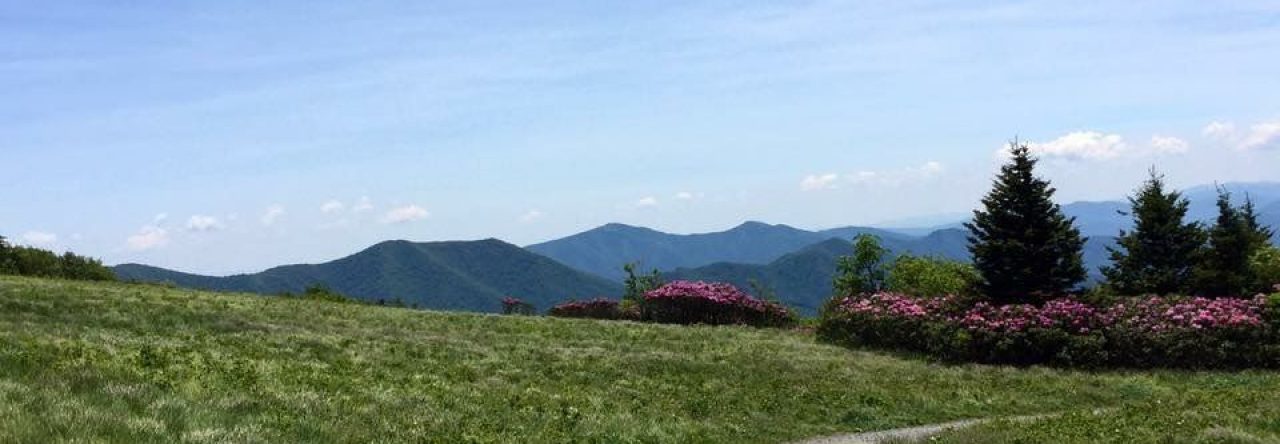
I worked for many summers at an all girls sleepaway summer camp in North Carolina. It’s tucked away in the Blue Ridge mountains, a few thousand feet up, on a lake at the foot of a bald rock mountain we call Old Bald. The camp itself caters to the children of serious, generational southern money. Country Club families from Buckhead in Atlanta and Mountainbrook in Birmingham etc. send their daughters there, because their mothers and grandmothers and aunts all went there too. The campers all go to the same private schools, and rush the same sororities when they go to college. Its an extremely white and privileged place. By no means did I grow up in want, and I am also white, but that camp introduced me to a rung on the tax bracket that I had never seen before, and it was an integral step down the rabbit hole of left wing politics I have fallen into, but I digress. I tended to seek out and try to support the outcast girls, the nerdy ones, because camp could be a brutally lonely place for those more bookish or introverted campers. I absolutely saw my younger self in them, and I myself wasn’t exactly embraced with open arms by the other staff; I had never been a camper there. There was a camper once with very serious ADHD, who many counselors got easily annoyed with, myself included. But one day, after a few summers of getting to know her, I realized she was a fledgling Tolkien reader. We would chat about the books often, which we both really enjoyed. She found my address in the camp bulletin and sent me a drawing she had done of the Durin’s Door illustration from Fellowship. I feel so lucky she sent me that.

Has the way you approach Tolkien’s work changed over time?

Without a doubt. I find something new to love with each rereading. I’ve developed a much deeper appreciation for Tolkien’s work, and have a much more difficult time with the racism and sexism of the world he created. I was young when I entered Middle-earth, but I ended up getting a Master’s in Medieval Studies, and as you can imagine, that is a context in which I got to talk a lot of Tolkien very often, with people who have become very good friends. It was a treat! It has also deepened my understanding of the scholastic context from which Tolkien wrote, for better and for worse. As I’ve been rereading recently, and as my own politics have moved towards the centrality of redressing systemic, historical patterns of racism and sexism, all of Tolkien’s imagery depicting the dark eyed, dark skinned hordes make me shudder, especially as the tide of global fascism rises around us. Colonization seems to be given a pass at times in Tolkien, and even his cardinal directions seem racist! North and West, good! East and South? Bad. I struggle a lot with how much of a pass I want to give Tolkien, and men like him more generally. Lets call it the problematic fave conundrum. Is Tolkien a product of his time? Absolutely, and maybe even better than most of that time. Is he worth reading? For me, still of course, yes. Do I understand that his project was inherently focused on a mythology of the British Isles? Sure, ok, fine. However Tolkien’s integral place among the racist and xenophobic history of medieval scholarship and fantasy literature is a stumbling block for me, and the adoption of the Tolkien Legendarium by the worst elements of online racists both breaks my heart, and is something for which I struggle to find a working defense. Of course they love him! Its painfully easy to see why.

Would you ever recommend Tolkien’s work? Why/Why not?

With reservations, yes, because of how foundational they have been in my life. I can’t imagine my life without loving Tolkien, but it gets harder every day, honestly, due to the context I lay out in my previous answer.


You can follow Caity M. on Twitter for more of her excellent thoughts on Tolkien and other topics!

LotRFI Pt.50–The Last Stand

This part of the text has an odd place in my recollection. I remember thinking about how each man who took part in this march was remarkably brave, and how I could relate to the men whom Aragorn allowed to turn back and accomplish a lesser deed because their valor faltered. I cannot remember a time when I felt as much tension or anticipation for the battle before the Black Gates as I did for the Battle of the Pelennor Fields.

Honestly, the largest part of this campaign that I remember is Pippin’s experience in the final battle. His narrative voice as the battle begins, and then the way his story is obscured by unconsciousness reminded me of Bilbo. This was especially true when the Eagles appear and Pippin claims that they were

‘in [Bilbo’s] tale, long long ago’ (RK, V, x, 893).

Just over the precipice of such a great battle, the narration cuts short and leaves much to the reader’s imagination. It is not until several chapters later that a recap of this battle is given, and in a very detached manner (except for the emotional asides from the tellers). Not only is this a trick of narrative to add suspense, but it puts Pippin squarely in the Bilbo-like (Bilboian? Bilboic?) role, which was significant in my first reading.

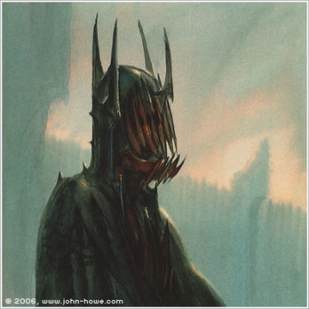
ff-mouth-of-sauron-port
Image copyright John Howe

Aside from this one aspect, the other parts of this chapter were less engrossing to me than the previous chapters. I followed Aragorn’s logic, and I thought that he led his campaign well, I just had a difficult time investing in these events. I think that part of my lack of investment is because I did not believe that they would die—this is probably in large part because I realized that half the book remained ahead of me, and I had no knowledge that the narrative would jump over and follow Frodo and Sam for much of the next book.

On a positive note, I really enjoyed the interaction between Sauron’s messenger and Aragorn/Gandalf. Their acerbic back-and-forth and posturing was very interesting to me.

Where Do We Go From Here?

Into Book VI with Frodo and Sam!

What Do You Think?

What was your impression of these passages and what did you think of the Mouth of Sauron?
​Did you connect Pippin and Bilbo?
​Did I miss anything? Let me know!

Paul Mitchener’s Experience–Tolkien Experience Project (47)

This is one in a series of posts where the content is provided by a guest who has graciously answered five questions about their experience as a Tolkien reader. I am very humbled that anyone volunteers to spend time in this busy world to answer questions for my blog, and so I give my sincerest thanks to Paul and the other participants for this.

To see the idea behind this project, check out this page

I want to thank Donato Giancola for allowing me to use his stunning portrait of J.R.R Tolkien as the featured image for this project. If you would like to purchase print of this painting, they are available on his website!

If you would like to contribute your own experience, you can do so by using the form on the contact page, or by emailing me directly.

Now, on to Paul Mitchener’s responses:


1. How were you introduced to Tolkien’s work?

There were two, maybe three stages. The first stage was The Hobbit being read to me when I was 8 or so at school, back in the early 1980s. About a year later, my grandfather recommended him to me, and I read The Hobbit on my own and The Fellowship of the Ring. For some reason, he only had the first volume of Lord of the Rings, though I reread Fellowship several times. When I was first at a new school when I was 11, almost the very first thing I did was go to the library, and notice they had the rest of the Lord of the Rings. I devoured them over the next few evenings.

2. What is your favorite part of Tolkien’s work?

Who’s your favourite child? More seriously, this is one of those answers which changes over time, and with each reading. I love Bilbo’s growth in The Hobbit from bumbling fish out of water to being a crafty hero, the way the world is revealed to the readers at the same time it is to the hobbits in Lord of the Rings, and the tragic grandeur of The Silmarillon.

And there are so many good individual moments. In Lord of the Rings for example, the charge of the Rohirrim on the Pelennor Fields, and Treebeard’s interactions with Merry and Pippin stannd out for me at the moment. If I’m going to answer just one thing, I’ll choose the sheer depth of Tolkein’s work, the way every piece of the landscape has character and history. There’s nothing else like it in fiction.

3. What is your fondest experience of Tolkien’s work?

I moved a little away from Tolkien in my early twenties, but seriously reconnected later. There were the movies, but in the wake of the movies I listened to the BBC radio play of Lord of the Rings for the first time, and of course reread the books. And I was struck anew by the great depths, and the sheer mythic reality of Middle-earth. In particular, I seriously appreciated The Silmarillion more than I ever had when I was younger, but it was not only The Silmarillion which felt new to me again.

And there have been other periods of rediscovery. In particular, I recently really enjoyed a group slow read of Lord of the Rings, with a mix of people very familiar with Tolkien and those with less experience.

4. Has the way you approach Tolkien’s work changed over time?

Definitely. Even after the first reading, on subsequent rereads I tended to rush through everything, enjoying the technicolour movie playing out in my brain. Later I started to dwell on the imagined world, drawing out connections between different parts of Middle-earth, and pondering questions such as “what happened to Radagast?” and “where did the Entwives go?” looking for clues in the text.

Most lately, I’m trying to go more slowly, dwelling on each part of the narrative as it comes, not rushing ahead to what comes next, and trying not to use my knowledge of what comes next to inform the present. I’m also engaging more with some of the thematic elements. Tolkien warned us against allegory, but also emphasised that applicability is something different.

5. Would you ever recommend Tolkien’s work? Why/Why not?

Certainly! Tolkien’s work is the deepest work of fantasy out there, and there’s nothing else like it.

It’s hard to find someone who doesn’t have biases about what Tolkien is and is not, informed by popular culture. I’d urge them to forget their biases, especially when it comes to what they think of as “Tolkienesque fantasy”, a term which misleads us about Tolkien’s depth, and engage with the original. It’s fun and something to lose oneself in. One can go as deep as one desires, or just enjoy the world, the story, and the characters.


If you want more thoughts from Paul Mitchener, you can find him on G+!